

Over 53 million caregivers in the U.S. are relatives, partners, friends, or neighbors who provide assistance to an older person or someone with a chronic, serious, or disabling health condition. However, many of them do not self-identify as caregivers and often do not know where to find help. When caregivers are supported, they are better equipped to provide care and help their care recipient remain at home.
States can play an important role in creating more access to information for family caregivers. Through state websites on caregiving, states can direct caregivers toward the support and services they might need.
How States Assist Family Caregivers
States assist family caregivers through a variety of funding sources, including Medicaid waivers, the Older Americans Act, federal grants, and state general revenue. Under the Older Americans Act, for example, states are provided funding to administer the National Family Caregiver Support Program. Through this program, each state funds family caregiver services and supports, which include:
- Information about available services
- Assistance in gaining access to the services
- Individual counseling, support groups, and caregiver training to assist caregivers in making decisions and solving problems
- Respite care to temporarily relieve caregivers
- Supplemental services, on a limited basis, to complement the care provided by family caregivers
These services can reduce caregiver depression and stress and enable caregivers to provide care longer, thereby avoiding or delaying the need for costly institutional care. However, the types of services available to family caregivers vary greatly by funding source, eligibility, and geographic area.
Promising Practices in State Family Caregiver Websites
NASHP recently launched a Caregiving State Policy Learning Collaborative with 13 states, many of which want to improve their outreach to family caregivers. NASHP completed a scan of every state and Washington, DC’s family caregiving websites. We identified the key elements of a quality state caregiving website and examples of each element from strong state websites.
Definition of a Caregiver
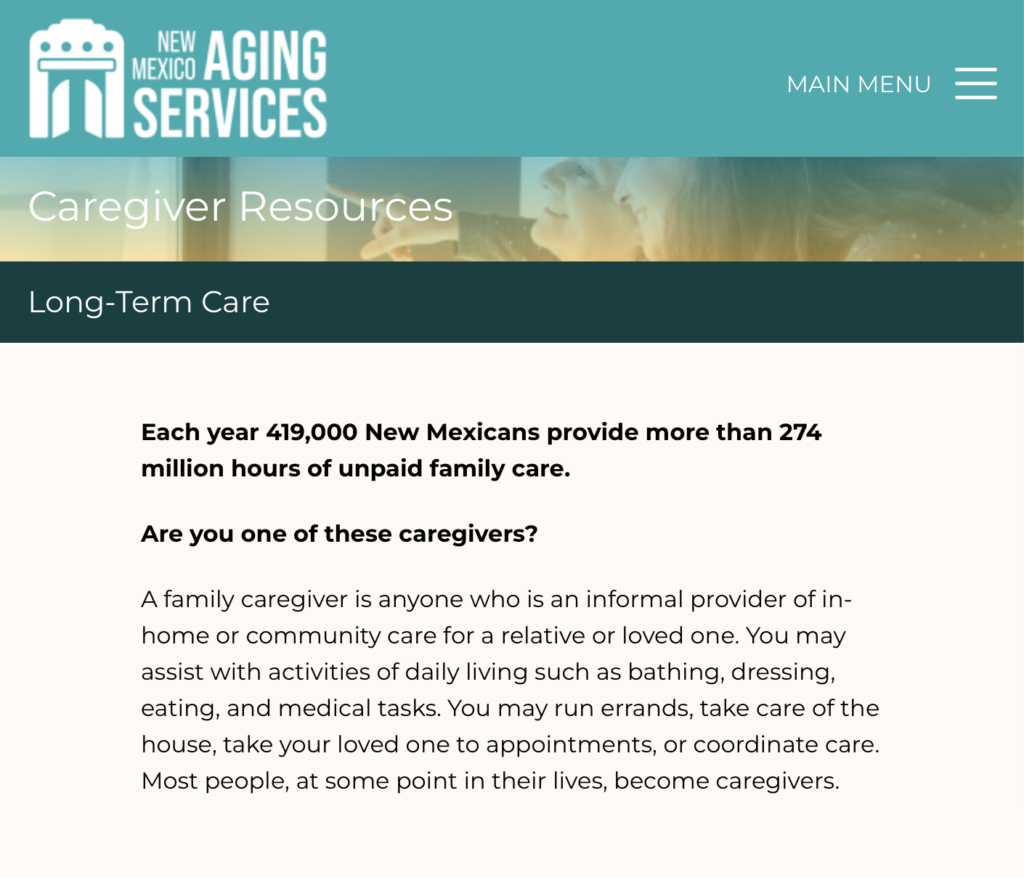
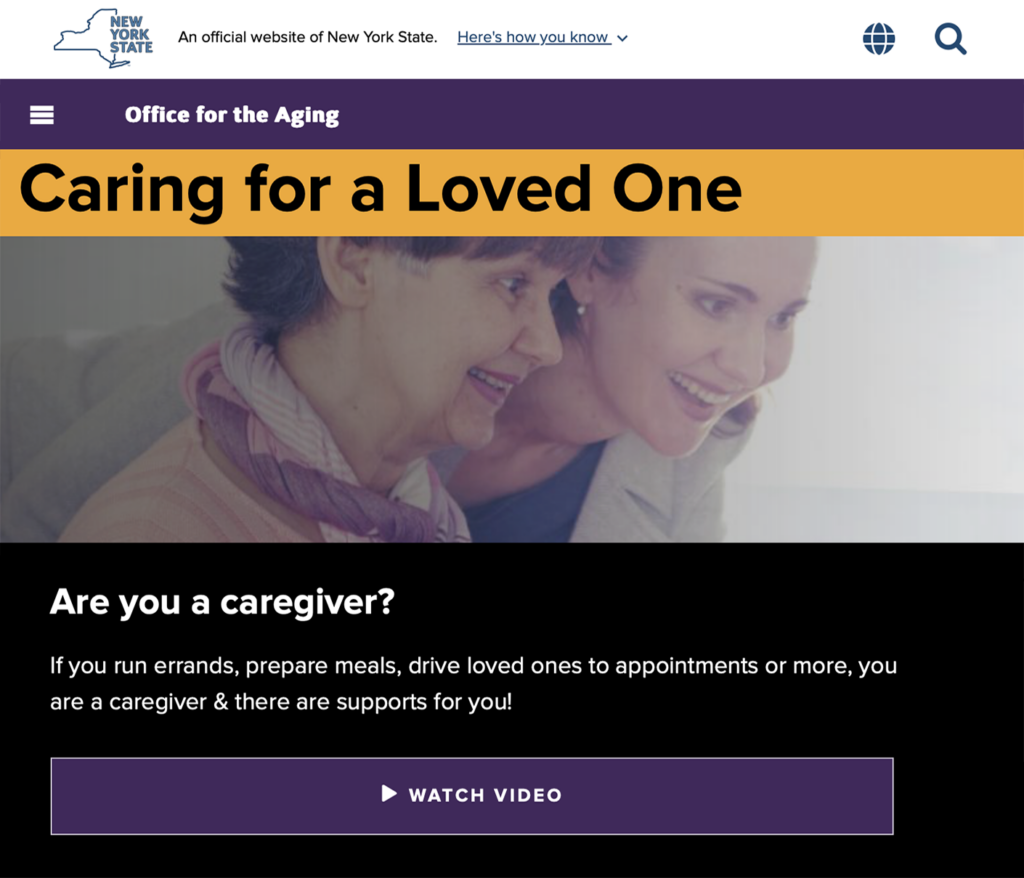
Because many people who are caregivers do not self-identify, a clear definition can encourage family caregivers to identify, which is a crucial first step in finding appropriate services and support.
New Mexico defines a family caregiver with examples of the types of tasks caregivers often perform. New York includes a video to lead individuals to self-identification as a caregiver.
Identification of and Access to Available Services
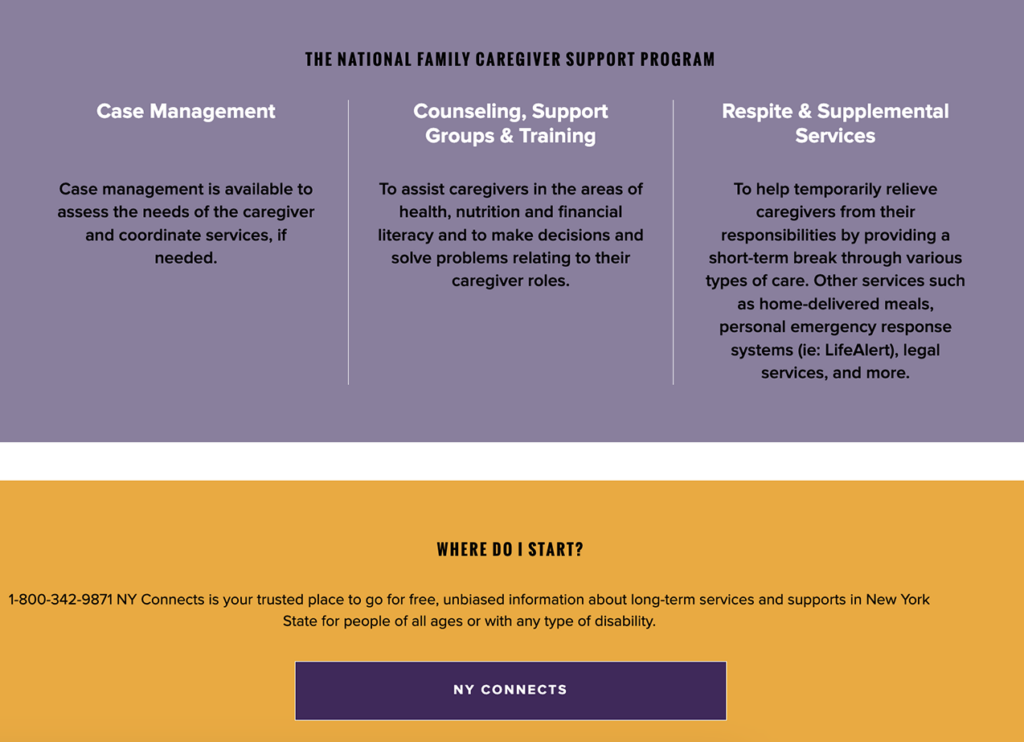
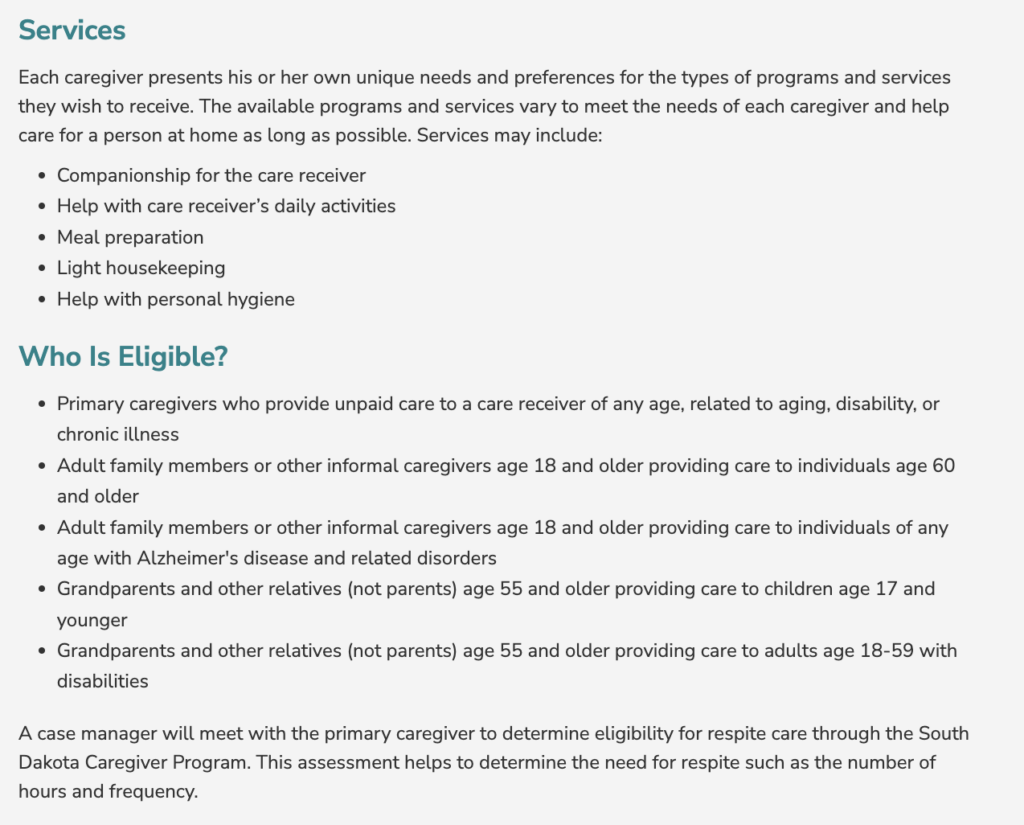
Caregivers often do not know what services are available or if they are eligible to receive any publicly funded services. Websites can explain these programs, provide eligibility requirements, and direct caregivers on how and where they can receive the services.
New York explains the elements of the National Family Caregiver Support Program and provides contact information for individuals to access the services through NY Connects, the state’s No Wrong Door system. South Dakota describes types of services caregivers might need and eligibility criteria to receive such services.
Search Tool to Find Nearby Services
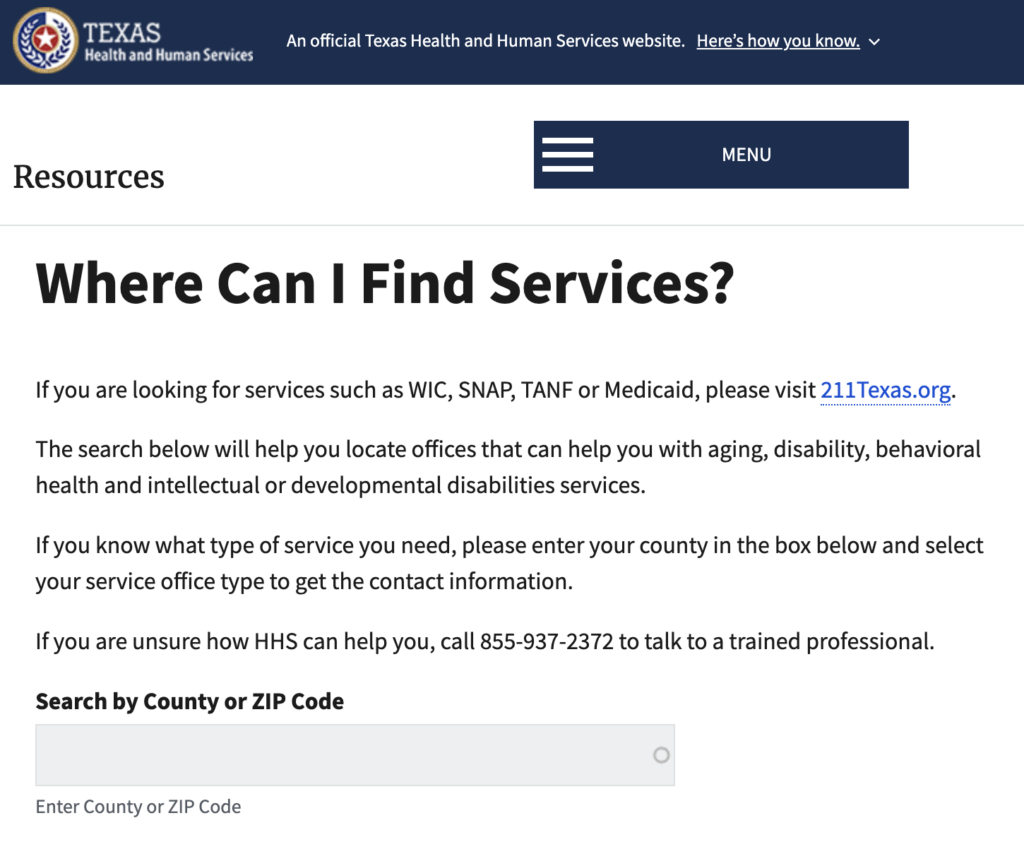
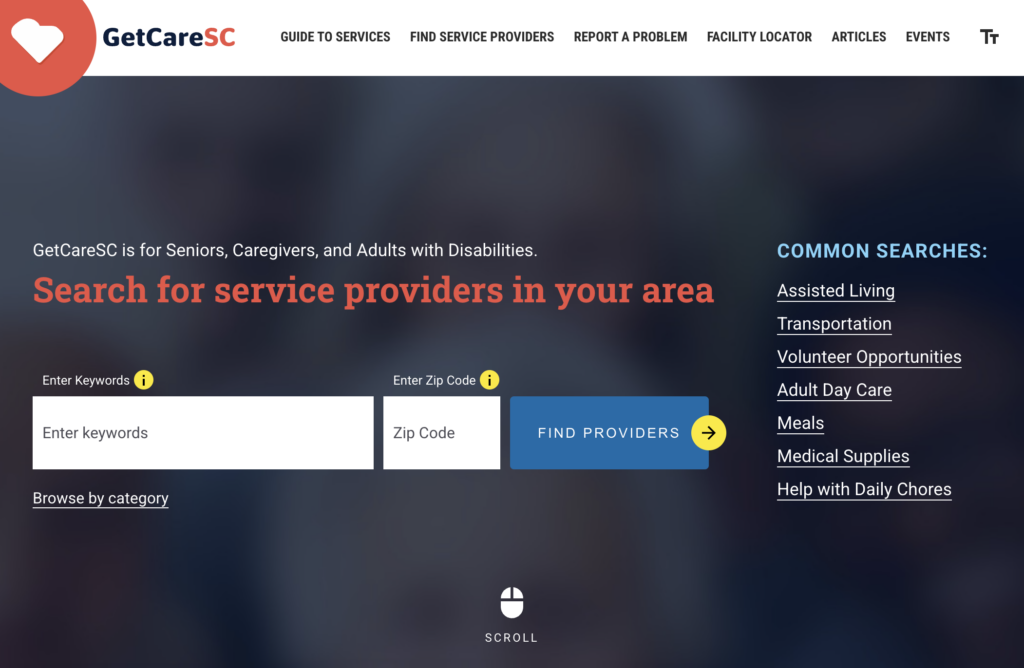
While some supports are available virtually, others take place in person. State websites can allow caregivers to search for providers or services by zip code or address.
Texas includes a search tool for the local offices that carry out the No Wrong Door System. South Carolina’s caregiving website directs caregivers to the state’s No Wrong Door System, GetCareSC. That page includes a search tool for providers that provide services such as respite for caregivers.
What Are No Wrong Door Systems?
No Wrong Door (NWD) is a network of state agencies and community-based organizations that helps people gain access to long-term services and supports by coordinating points of entry in each state. NWD is intended for anyone seeking long-term services and support, regardless of age or income. NWD systems such as NYConnects in New York and GetCareSC in South Carolina are directly linked on the states’ caregiving websites. In other states, such as Texas, the NWD system is carried out by each Aging and Disability Resource Center (ADRC). Texas’ caregiving website has a search tool to connect each caregiver with the appropriate ADRC. Individuals can visit the ADRC in person or communicate with ADRC staff online or via phone. To ensure caregivers are aware of services and supports for their own needs, NWD pages can include links to the state’s caregiving websites.
Free Training and Other Educational Materials
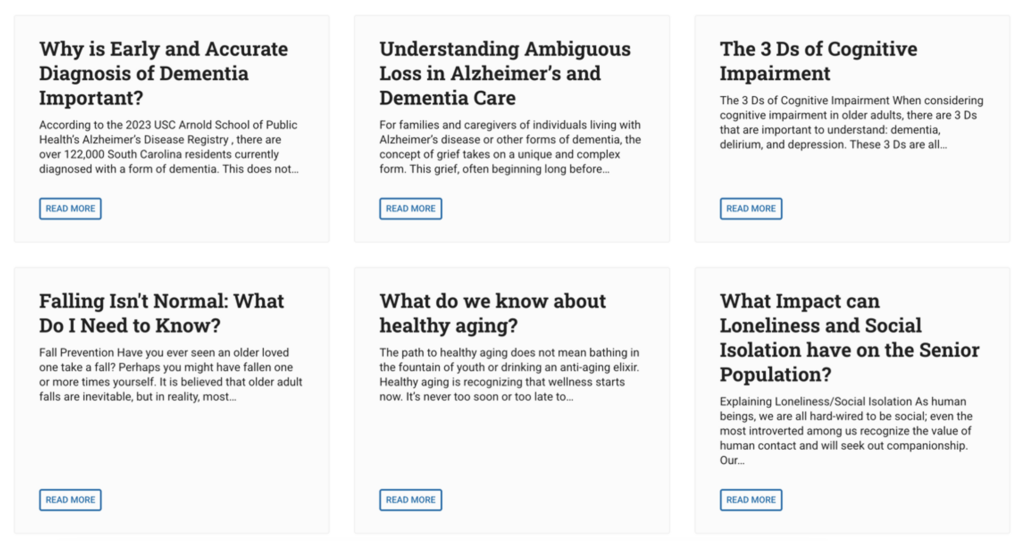
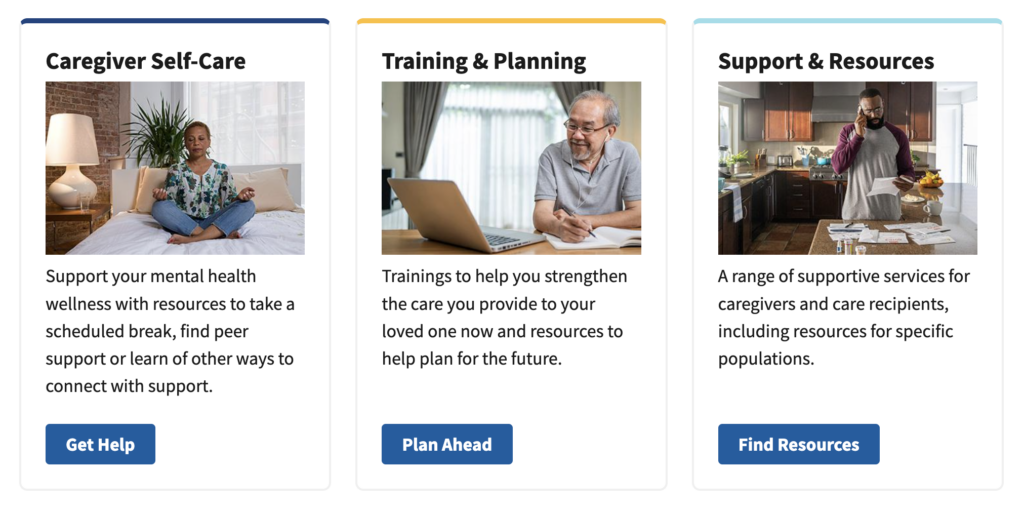
States often have free training programs or materials for caregivers, and state websites can lead caregivers to these opportunities.
South Carolina provides articles on important elements of family caregiving, including fall prevention, dementia, and social isolation and loneliness. Texas provides access to trainings, caregiver self-care information, and additional support resources.
Additional Resources
States can better ensure that the diverse needs of caregivers and their care recipients are met through partnerships and targeted initiatives, and state websites can point caregivers with specific questions to the right answers.
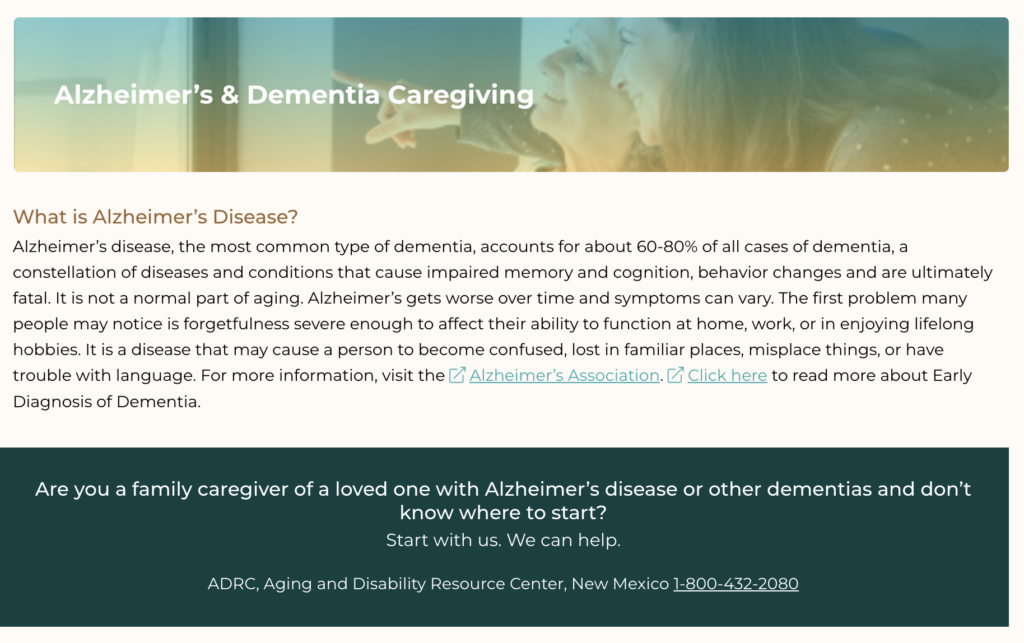
New York includes links to external partners, such as ARCH National Respite Network and Resource Center and the Kinship Navigator. New Mexico provides a landing page for caregivers of those with Alzheimer’s disease and related dementias, with supporting resources and services available.
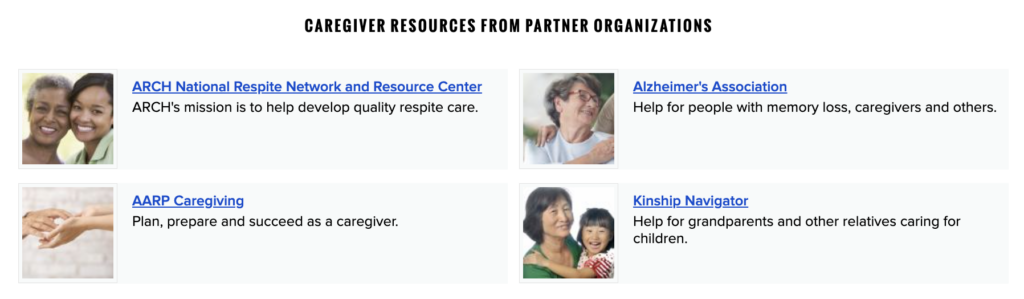
Sample Key External Resource Links for a State Caregiving Website
- AARP Family Caregiving
- Alzheimer’s Association 24/7 Helpline
- ARCH National Respite Network and Resource Center
- Best Programs for Caregiving
- Eldercare Locator Caregiver Corner
- Grandfamilies.org
- Kinship Navigator Programs (state-specific)
- National Alliance for Caregiving
- National Institute on Aging Caregiver Toolkit
- VA Caregiver Support Program
User-Friendly Interface
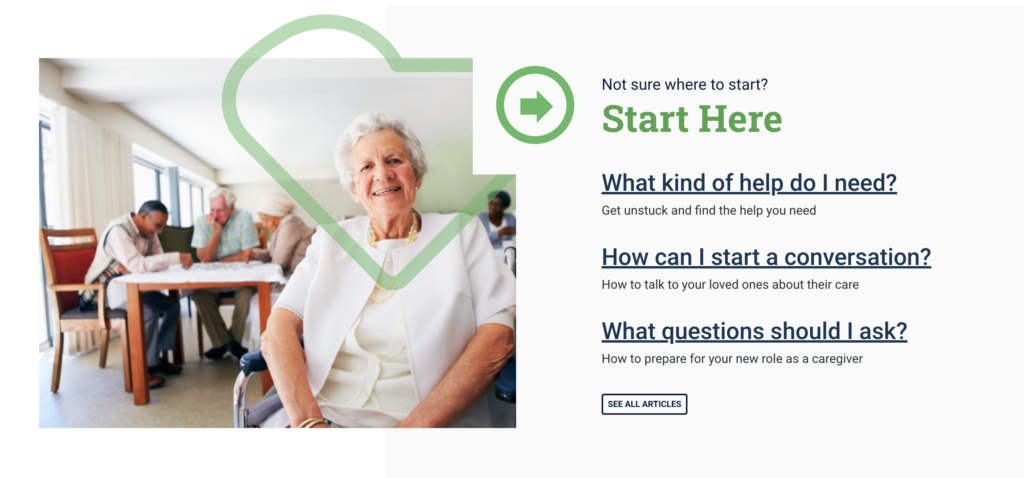
While it can be difficult to know where to start, state websites can make it easier for caregivers to find what they need.
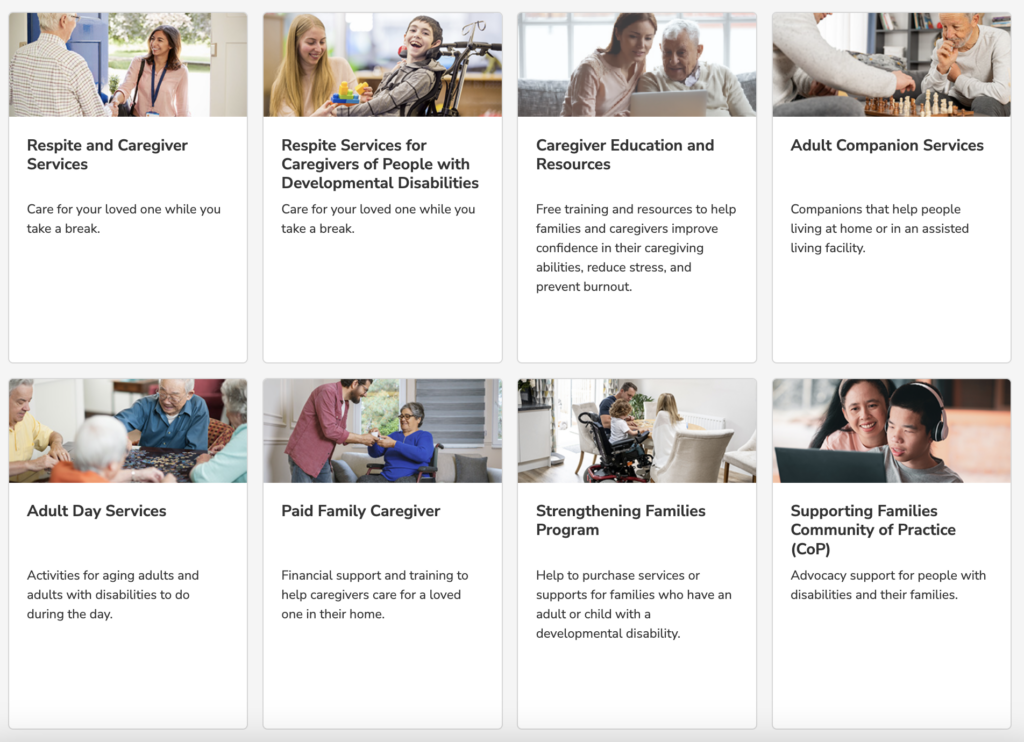
South Dakota displays its various programs and services on an interface that is easy to see and read. South Carolina includes a landing page for caregivers who are unsure what type of resources and support they need.
Strong information technology enables smooth referrals, data collection, interoperability, and searchability. For states looking to improve their websites, the No Wrong Door Administration for Community Living technical assistance has resources on use of IT and management information systems and a checklist for selecting an IT vendor.
The Importance of States
Through strong caregiving websites, states can play an important role in connecting family caregivers to resources, services, and support. Caregivers go online to look for services for their loved ones, which creates an opportunity for states to help caregivers self-identify and access support. States can promote these websites to employers, health and hospital systems, and other organizations frequented by caregivers to increase utilization.
To learn about more state strategies to support family caregivers, visit NASHP’s RAISE Act Family Caregiver Implementation and Technical Assistance Center. Explore SupportCaregiving.org for resource guides with strategies on caregiver support for states, employers, health care teams, managed care organizations, and more.
Acknowledgement
NASHP would like to express our gratitude to The John A. Hartford Foundation for making this publication possible through NASHP’s RAISE Act Family Caregiver Implementation and Technical Assistance Center.