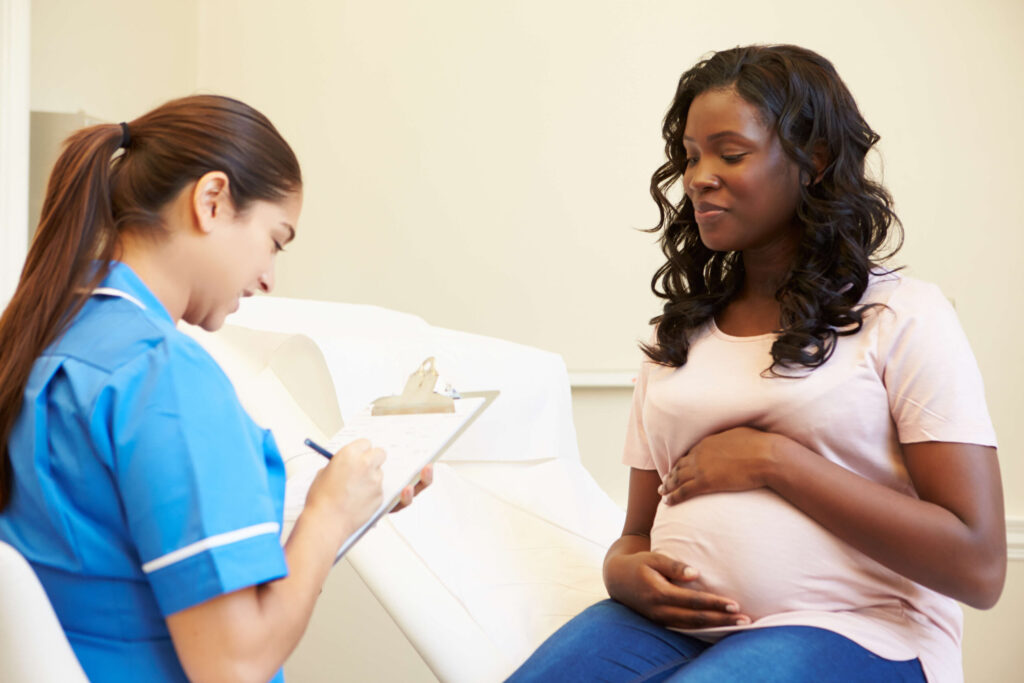

Maternal health remains a national priority as states continue to address longstanding disparities in maternal health outcomes, the U.S. maternal mortality rate exceeds that of other nations, and most preventable pregnancy-related deaths occur during the postpartum period.
Many states have implemented new strategies to address the maternal health crisis, and some states have passed sweeping “Momnibus” bills. At least two-thirds of states have included a focus on maternal health in their Rural Health Transformation Program (RHTP) applications, with many states planning to target efforts to improve access to quality maternity care in rural communities. Finally, states continue to prioritize Medicaid postpartum coverage extension while balancing state and federal budget shortfalls.
Access to quality, comprehensive perinatal care — care provided before, during, and after pregnancy — is critical to improving maternal health outcomes and can help identify potential health risks, initiate timely interventions for chronic conditions (e.g., hypertension, diabetes), and address health-related social needs such as good nutrition that are critical to healthy pregnancies.
States are prioritizing a range of policy and programmatic strategies to expand Medicaid coverage during the perinatal period, improve access to timely and high-quality maternity care, and optimize Medicaid postpartum coverage extension. They are also strengthening the perinatal health care delivery system through cross-sector efforts between state Medicaid programs, public health (e.g., Title V Maternal and Child Health Services Block Grant programs), behavioral health, provider groups, and community-based partners. These state strategies include the following:
- Ensuring comprehensive and continuous Medicaid coverage, including postpartum coverage extension: States are ensuring pregnant and postpartum women and perinatal health providers are aware of postpartum coverage extension to ensure continuous Medicaid coverage and are considering ways to optimize, monitor, and evaluate its impact on service utilization during the postpartum period and overall health outcomes.
- Ensuring access to perinatal services through workforce support and state financing strategies: States are ensuring the provision of perinatal services to pregnant and postpartum women by supporting the perinatal health workforce through Medicaid reimbursement, and by developing new or enhanced payment strategies, such as unbundled payments and alternative payment models.
- Supporting connections and transitions to primary care: States are elevating approaches for pregnant women to access primary care providers and specialists early and throughout pregnancy, particularly for pregnant women with chronic conditions, and supporting a smooth transition from perinatal care to primary care to ensure continuous care during and beyond the postpartum period.
- Strengthening perinatal and postpartum services and care coordination: States are implementing approaches to strengthen maternity care services and care coordination to help women access needed maternity care services, specialty care, and resources throughout the perinatal and postpartum periods.
Ensuring Comprehensive and Continuous Medicaid Coverage, Including Postpartum Coverage Extension
All states have chosen to extend Medicaid income eligibility for pregnant and postpartum women beyond the federal minimum requirements of 138 percent of the federal poverty level. As of March 2026, 48 states and Washington, DC, have extended Medicaid postpartum coverage to 12 months, under a provision made permanent by the Consolidated Appropriations Act of 2023. Pregnant women eligible for extended postpartum coverage in Medicaid and the Children’s Health Insurance Program (CHIP) are entitled to continuous eligibility through the last day of the month in which the 12-month postpartum period ends. Despite state budget deficits and federal funding cuts to Medicaid, many states indicate that optimizing postpartum care during the 12-month period remains a priority given that many preventable maternal deaths occur during this time. States are leading innovative strategies to ensure that pregnant and postpartum women have access to comprehensive and continuous Medicaid coverage, including identifying opportunities presented in the 12-month postpartum coverage period.
Identification of Pregnant Women Enrolled in Medicaid
State Medicaid agencies and their contracted managed care organizations (MCOs) may rely on claims data or pregnant women’s self-reporting to determine that a woman enrolled in Medicaid is pregnant. Such reliance can limit the ability to assess health needs, address risk factors, and initiate care coordination early in pregnancy. Some states have established a process to identify pregnant women sooner. This includes submission of the report of pregnancy (ROP), also known as notification of pregnancy, which supports early identification of pregnancy, screening for risk factors, and improved coordination between pregnant women, health care providers, and managed care entities.
Ohio Medicaid reimburses a range of providers for the completion of an ROP form to report the initial identification of pregnancy and to assist women in maintaining Medicaid eligibility and care coordination. The ROP is connected to the Ohio Benefits eligibility system, notifies Medicaid MCOs of the pregnancy, and refers eligible pregnant women to home visiting services and the Special Supplemental Nutrition Program for Women, Infants, and Children. Most Medicaid-enrolled providers are eligible for reimbursement after completing an ROP. These providers include, but are not limited to, physicians, physician assistants, advanced practice registered nurses (e.g., certified nurse midwives, certified nurse practitioners, clinical nurse specialists), community mental health providers, licensed independent social workers, clinical counselors, marriage and family therapists, chemical dependency providers, physical therapists, occupational therapists, speech language pathologists, dentists, audiologists, and doulas.
Provider and Beneficiary Education and Awareness of Extended Postpartum Coverage
States are prioritizing ongoing outreach and education to ensure that eligible pregnant and postpartum women are aware of extended postpartum coverage, understand the services they are eligible to receive, and are supported in accessing services. Some states have conducted education campaigns using a range of methods to reach those who may be eligible for extended postpartum coverage. For example, Washington used social media posts and radio broadcasting, conducted community-based outreach and listening sessions, disseminated educational brochures across a range of settings frequented by families, and shared information on state agency webpages. Washington also refers to extended postpartum coverage as “after-pregnancy coverage” to help ensure pregnant and postpartum women understand what postpartum coverage means.
States continue to educate clinical providers (e.g., primary care physicians, OB-GYNs) about the availability of extended postpartum coverage because many states report some providers are unaware of the Medicaid benefit. States communicate with clinical providers about key policy changes through Medicaid enrollment and billing systems, health plans, state agency websites and information bulletins, and social media. Some states are surveying providers to understand gaps in communication and difficulties in transitioning women to postpartum care. Additionally, states are encouraging clinical providers to educate and counsel Medicaid members during prenatal care visits about their continued eligibility for Medicaid and the services available during the postpartum period.
Monitoring and Evaluating the Benefits and Impact of Extended Postpartum Coverage
Many states are strengthening how they track and assess service utilization and health outcomes associated with extended postpartum coverage. States are assessing how postpartum women are enrolled in Medicaid, the services utilized during the first year postpartum, and the cost of services during the postpartum period. As part of postpartum service utilization assessments, states have reported coverage for a range of services, such as contraceptive care counseling, postpartum depression screening, and case management.
States that extended postpartum coverage via a Section 1115 waiver are required to submit evaluation plans for approval from the Centers for Medicare & Medicaid Services. Virginia’s approved evaluation plan aims to assess if the 12 months postpartum demonstration achieves the following goals: “1) Promote continuous coverage and continuity of care for women in the postpartum period; 2) Increase access to medical and behavioral health care services and treatments for women in the postpartum period; 3) Improve health and address health-related social needs for postpartum Medicaid and CHIP enrolled women; 4) Improve health access and health outcomes for infants of postpartum Medicaid and CHIP enrolled women; and 5) Advance health equity by reducing racial/ethnic and other disparities in maternal coverage, access, and health outcomes as well as infant health outcomes among postpartum Medicaid and CHIP enrolled women and their infants.” Preliminary evaluation findings indicate that the 12 months of extended postpartum coverage for Medicaid and CHIP members in Virginia has helped increase the number of days of continuous coverage following delivery. This is particularly the case for members enrolled in CHIP pregnancy coverage, for whom ongoing coverage through Medicaid expansion was not previously available.
States are considering ways to understand the population health needs of pregnant and postpartum women. Some state Medicaid agencies have conducted focus groups and other Medicaid member engagement activities to understand member needs and help ensure that policy priorities for postpartum coverage are aligned with these needs. State public health agencies are leveraging the Title V needs assessment, a comprehensive assessment of a state’s maternal and child health services needs that is required of state Title V agencies every five years, to further assess the needs of pregnant and postpartum women and align efforts with their Medicaid counterparts.
Ensuring Access to Perinatal Services through Workforce Support and State Financing Strategies
States are implementing innovative workforce and financing strategies to support the unique needs of pregnant and postpartum women. This includes efforts to ensure access to patient-centered care and a range of perinatal health providers (e.g., OB-GYNs, midwives, doulas). States are also implementing innovative strategies to strengthen the perinatal health workforce and expand access to comprehensive, quality perinatal care through Medicaid reimbursement of clinical, nonclinical, and community-based providers.
Medicaid Coverage and Reimbursement of Doulas, Midwives, and Nonclinical Providers
More than half of states (26 states and Washington, DC) have expanded access to doula services through Medicaid reimbursement. Some states have also extended doula coverage through the full 12-month postpartum period. As part of efforts to operationalize the doula benefit, state Medicaid agencies have engaged doulas in advising on licensure, reimbursement, and billing policies. States have also created training and career pathways through partnerships with community colleges and local organizations to build a sustainable doula workforce.
Additionally, states are investing in high-quality midwifery care to support, sustain, and expand the perinatal health workforce. All 50 states and Washington, DC, reimburse for certified nurse-midwife services, and at least 18 states and DC also reimburse for services provided by non-nurse midwives (e.g., certified professional midwives, certified midwives). States are addressing reimbursement rate disparities among these types of providers and evaluating ways to ease regulatory restrictions (e.g., licensure requirements, scope of practice limitations) to improve payment parity for midwifery.
States are also identifying and assessing payment strategies to support increased access to midwifery care across different birth settings (e.g., hospitals, birth centers, home births). California’s Department of Health Care Services “Birthing Care Pathway Report” includes strategy solutions and opportunities toward redesigning Medi-Cal (California’s Medicaid program) maternity care payments to support increased Medicaid reimbursement rates, expand maternity measures in quality incentive programs, and improve access to a range of perinatal health providers and services.
Beyond Medicaid reimbursement of doula and midwifery services, some states are expanding access to perinatal care and addressing workforce shortages by offering Medicaid reimbursement for other key providers, such as lactation consultants, community health workers, and peer support specialists. States are also identifying and implementing strategies to leverage nonclinical providers to better address the leading causes of poor birth outcomes and maternal chronic conditions (e.g., hypertension, diabetes, substance use disorders). For example, nonclinical providers can help monitor and identify cardiovascular conditions by assisting patients with using remote patient monitoring technology, monitoring collected patient data, and communicating with patients to ensure their safety and compliance.
Maternal mental health disorders (e.g., anxiety, postpartum depression) and substance use disorders are among the leading causes of maternal mortality. One key strategy that states are using to address perinatal mental health conditions is to employ nonclinical providers, such as peer support specialists, to provide mental and behavioral health support during the pregnancy and postpartum periods. Massachusetts requires certain managed care entities participating in MassHealth (the state’s Medicaid program) to provide Peer Recovery Coach and Recovery Support Navigator services, and the state established enhanced reimbursement rates for providing these services to members with a substance use disorder who are pregnant or have been pregnant in the last 12 months and are either in or seeking recovery. Through Medicaid payment initiatives and other policy levers, states are expanding access to a variety of perinatal health providers who deliver evidence-based, patient-centered care.
State Payment Strategies
States are designing and implementing an array of payment strategies, including Medicaid and other mechanisms. One strategy includes using Medicaid waivers to extend perinatal services during the postpartum coverage extension period, as the waivers allow states to expand eligibility, benefits, and services for a 12-month period. For example, New Mexico’s Section 1115 Medicaid waiver provides an expanded benefit and service through its Food is Medicine program to offer home-delivered groceries and prepared meals to pregnant and postpartum women with diabetes. The benefit is available throughout pregnancy and for up to two months after delivery. Another strategy includes payment for alternative services through Medicaid “in lieu of services and settings,” which allows MCOs to cover non-traditional services as a substitute for services already covered in the state’s Medicaid plan. For instance, through an arrangement between Missouri HealthNet Division (the state Medicaid agency) and the state’s MCOs, the MCOs will pay for home visiting services for a subset of high-risk perinatal members from pregnancy up to one year postpartum through the In Lieu of Services – Medicaid Reimbursement for Perinatal Home Visiting project. Children’s Trust Fund (CTF) of Missouri is the fiscal intermediary, allowing home visiting agencies to seek reimbursement directly from CTF.
States provide perinatal services through an episode of care model that uses bundled payments, or a single fixed payment, for all maternity care services over a defined period. Alternatively, some states have implemented or are considering payment reforms, such as Iowa Medicaid’s process for unbundling obstetric payments to separate maternity services and ensure payment to providers for the specified service delivered. States are also developing value-based payment models to incentivize high-quality care, including implementing maternity care alternative payment models (APMs), such as the Ohio Department of Medicaid’s Comprehensive Maternal Care APM, which specifies per member per month and quality incentive payments for entity participation in a quality improvement project, integration and support of community partners, and integration of information from patient feedback into processes if all other program requirements are met.
In addition to these payment strategies and models, states continue to leverage federal, state, and private funding to sustain a comprehensive perinatal system of care. The RHTP was authorized by the 2025 H.R.1. law to provide a total of $50 billion in temporary funding across eligible states over five years beginning in fiscal year 2026. The RHTP aims to empower states to strengthen rural communities across America by improving health care access, quality, and outcomes by transforming the health care delivery ecosystem. Many states are leveraging RHTP funds to mitigate the impact of Medicaid cuts to rural hospitals.
Additionally, states are considering the RHTP to strengthen perinatal systems and sustain access to services during the postpartum coverage extension period. States have proposed an array of strategies such as advancing technology (e.g., mobile health units and telehealth), developing regional health collaboratives or models to enable access to maternity care along with primary and specialty care, supporting workforce development, and expanding community-based care options (e.g., birth centers). States are continuing cross-sector coordination across state agencies, perinatal health providers, health plans, and community-based organizations to effectively leverage this one-time investment opportunity.
Strengthening Perinatal and Postpartum Services and Care Coordination
Maternity care coordination can help improve maternal health outcomes by supporting access to maternity care services and resources throughout the perinatal and postpartum periods. Many states are expanding or enhancing efforts to strengthen care coordination and services for pregnant women, particularly for pregnant women with chronic conditions (e.g., hypertension, diabetes) who do not have access to primary care or specialists. For many pregnant women, lack of access to primary care can hinder treatment for chronic conditions. States are identifying strategies for women to access primary and specialty care earlier, when issues are first identified.
Care coordination is essential during the postpartum period, a critical time when most maternal deaths and morbidity occur, to ensure access to continuous care and address ongoing chronic conditions. State-level partnerships between organizations that support women, children, and families in the health and human services system (e.g., health department, social services, community-based organizations, health systems, hospitals, outpatient clinics) can be key to effectively facilitate care coordination across programs to address the health and social needs of pregnant and postpartum women.
Some state Medicaid agencies are leveraging pregnancy risk assessment forms to support care coordination and data sharing between providers and Medicaid MCOs. The use of perinatal risk assessment forms to conduct timely screenings and referrals to other needed services can support continuous coverage and increase access to targeted services. States are increasingly implementing standardized perinatal risk assessment forms to identify mental health conditions, housing and nutrition needs, substance use disorders, intimate partner or domestic violence situations, and risk factors associated with perinatal chronic health conditions (e.g., hypertension, gestational diabetes). Some states also incentivize the completion of perinatal risk assessment forms. New Jersey requires prenatal health providers to complete the Perinatal Risk Assessment (PRA) form to receive reimbursement for maternity care services provided to pregnant women covered by NJ FamilyCare (New Jersey’s Medicaid and CHIP programs). Provider completion of the PRA form is also a reimbursable service to compensate providers for the time it takes to complete the form.
States are strengthening maternity care services to address chronic conditions, such as hypertension and gestational diabetes, using remote patient monitoring. Remote patient monitoring can be a beneficial tool for both patients and providers, enabling providers to coordinate and manage patient care, monitor chronic conditions in real time, identify early warning signs, and make timely interventions when needed. Through a partnership between the state’s Department for Medicaid Services and the Department for Public Health, Kentucky implemented a policy to expand eligibility and access to continuous glucose monitors (CGM) to women with gestational diabetes. This pharmacy benefit provides eligible Medicaid members who have gestational diabetes, including those without insulin dependency, a CGM device. The CGM enables 24/7 monitoring and helps providers and the member manage high blood sugar.
Many states are implementing strategies to strengthen the perinatal health care team, including clinical and nonclinical providers, and supporting clear communication across the team to optimize care delivery. One such effort is Oklahoma’s TeamBirth approach, a collaboration between the Oklahoma Perinatal Quality Improvement Collaborative and other supporting partners. The TeamBirth approach is a process that involves a series of team huddles between patients, their support people (e.g., family, doula), and their clinicians during birth. TeamBirth is designed to provide coordinated, structured input and communication from the patient and all members of the care team in developing a patient-facing shared planning tool (e.g., white board, paper handout, mobile app). The planning tool includes the names of all care team members, care plans for mother and baby regarding care preferences during birth (e.g., pain medication, birthing positions, physical environment) and after birth (e.g., skin-to skin contact, feeding, vaccinations), and expectations for the next huddle. The tool is required to be visible and accessible to the full care team throughout labor and delivery until the patient is discharged.
In some states, home visiting services are provided to women to ensure holistic support, including medical and social services needs identification, through care coordination and connections to services and supports. Home visitors can be critical during the postpartum period because they can provide women with additional needed support, such as coordinating attendance at the initial postpartum visit or identifying mental health resources.
The service is also available to families who experience a stillbirth or loss of a newborn, as well as adoptive and kinship families. During the home visit, the nurse addresses questions and concerns of the parents and connects the family with appropriate community resources. Most families receive just one home visit, but up to two follow-up visits can occur if determined necessary. All home visits must be conducted within the 12-week postpartum period. Home visits are provided at no cost to all New Jersey families who reside in the participating counties, which includes 17 out of 21 counties in 2026 and all counties in the state starting in 2027.
Supporting Connections and Transitions to Primary Care
Ensuring access to primary and specialty care is critical during the perinatal health period, particularly for women with chronic conditions. In some cases, pregnant women enter care having not had a primary care provider prior to pregnancy, resulting in untreated chronic conditions. To help support transitions of care between perinatal and primary care providers and specialists, some states encourage providers and/or postpartum women to report the end of pregnancy date to ensure a smooth transition to well-woman care and health coverage post-pregnancy. North Carolina’s Medicaid program requires beneficiaries to report the end of pregnancy within 10 days via a call to their caseworker at the Department of Social Services to receive the full 12 months of postpartum coverage. End of pregnancy notification can also be provided by the provider or hospital. The postpartum period is calculated based on the expected due date; however, beneficiaries must report if the pregnancy ends sooner or later than the expected due date. The purpose of reporting any change from the expected due date to the actual pregnancy end date is to accurately reflect when the postpartum period begins to help ensure continuous coverage of services from the pregnancy end date through the 12-month postpartum period.
States are supporting women beyond pregnancy and into the postpartum period to inform, educate, and provide warm handoffs to a primary care provider when women are discharged from pregnancy care. This helps ensure women do not fall through the cracks between obstetric care and primary care. In addition, states are developing innovative tools to support perinatal care during the postpartum period. For example, the Pennsylvania Department of Human Services partnered with the University of Pittsburgh to develop a consumer-facing app, MYANA, to support new moms during the postpartum period. The app provides educational tips and allows the user to track postpartum healing and recovery and check the baby’s milestones.
States are also making efforts to strengthen dyadic care for mothers and infants during the postpartum period with pediatric providers, integrating maternal and infant health care services within the pediatric setting. This approach leverages the infant’s recommended schedule of “well-baby” medical appointments to address the new parent’s physical and mental health needs. As previously described, maternal mental health and substance use disorders are among the leading causes of maternal death, which occurs most often during the postpartum period. The postpartum visit is critical for identifying these disorders early and referring to services, if needed.
Conclusion
Improving maternal health outcomes remains a high priority for states as they continue to advance strategies to strengthen and sustain perinatal health care systems and optimize postpartum care. These policy strategies aim to ensure access to quality perinatal services for pregnant and postpartum women, including optimizing postpartum coverage extension. States continue to seek ways to ensure postpartum women receive the benefits and services available to them during the postpartum coverage extension period to help improve health outcomes during this critical period. NASHP will continue to track state approaches improving perinatal health care systems as part of its ongoing work in maternal health.
Acknowledgments
This brief was written by Robin Buskey, Anoosha Hasan, and Dakota Staren. The authors thank Karen VanLandeghem for contributing to this brief through input, guidance, and draft review. NASHP thanks the state health officials for their review. This resource was made possible by the Pritzker Children’s Initiative.