
Introduction: Understanding the Rural Health Landscape
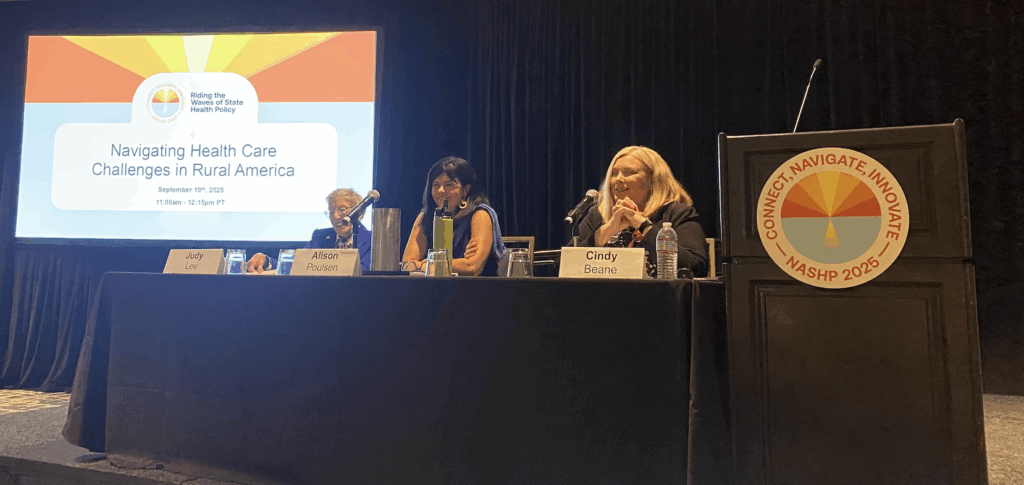
Roughly one in five individuals live in a rural community, and nearly every state has rural areas. Persistent challenges such as limited access to care, workforce shortages, and infrastructure gaps require targeted state policy solutions. The disparities between rural and urban health outcomes are stark. For example, rural residents are more likely to die earlier than urban residents from the following leading causes of death: heart disease, cancer, unintentional injuries, chronic lower respiratory disease, and stroke. Such figures reflect broader issues in access, affordability, and system design – and they underscore the need for responsive, community-informed policy. A session at NASHP’s recent annual conference highlighted perspectives from and strategies employed in North Dakota, Washington, and West Virginia to improve access to care in rural communities.
Workforce and Capacity Challenges Magnified in Rural Communities
Workforce shortages – especially in rural areas – continue to be a key issue among states. North Dakota described the absence of neonatal intensive care units (NICUs) in many rural areas, contributing to what is often called “maternity care deserts.” In turn, North Dakota’s Department of Health and Human Services contracted for a “Maternal Care Quality and Utilization Focus Study,” which recently published findings and recommendations for the Department to address maternal health care challenges.
Per a 2024 rural access study directed by the state’s legislature, Washington faces challenges to providing behavioral health services in rural communities. One solution to this is their utilization of community care hubs. Better Health Together, which services the eastern part of Washington State, is one of nine community care hubs. One element of their work is addressing behavioral health workforce gaps by funding supervision for providers still in training – an approach made possible through the state’s Medicaid 1115 substance use disorder waiver amendment.
West Virginia too faces a medical personnel shortage with a projected 14 percent shortage of primary care physicians by 2030. To help curb this, the West Virginia legislature passed HB 4768 in 2024 to provide in-state medical school tuition for non-residents who will commit to an equal number of years of practice in rural, medically underserved areas of the state. This underscores a broader promising intervention to retain physicians in rural practice.
Enabling Access via Broadband and Telehealth
All three states emphasized the importance of broadband and telehealth in expanding service access. West Virginia, through recent legislation, made permanent telehealth flexibilities that were first implemented during the COVID-19 pandemic. Washington invested in broadband infrastructure to support service delivery through Federally Qualified Health Centers (FQHCs) and school-based programs. North Dakota, with some of the highest broadband coverage in the country, is using assistive technologies to help residents remain in their homes and communities. These investments help rural residents access care more consistently, especially in areas where provider shortages are most acute.
Behavioral Health Access Points
To address behavioral health in rural communities, states are creatively looking to various service access points:
- Schools: School-based programs can be a key strategy to offer preventative and behavioral health services in rural communities. North Dakota found success by embedding licensed behavioral health liaisons in schools. This approach eliminated silos between education and health and behavioral health and related social services systems and simplified billing processes. Washington partnered with county coalitions to provide school-based behavioral health, which resulted in reduced student absenteeism.
- Certified Community Behavioral Health Clinics: Through recent legislation, North Dakota required all human service centers to convert to certified community behavioral health clinics (CCBHCs). CCBHCs are designed to ensure access to comprehensive behavioral health care for anyone regardless of ability to pay, ensure 24/7 access to crisis services, and require coordination with needed physical health and social support services.
- Paramedical ambulatory care: West Virginia provides Medicaid codes for “treatment in place” options, allowing Emergency Medical Services (EMS) to provide certain types of care without unnecessary emergency room visits.
Trusted Local Partners
As rural populations age, family caregivers are playing a larger role in long-term care. Washington is using its Medicaid Transformation Project 2.0 (MTP 2.0) 1115 demonstration waiver to support caregivers through flexible Medicaid funding – offering respite services and easing income requirements.
“When we think about being able to use some of those Medicaid dollars flexibly to support family caregivers… that is a direct financial benefit to the long-term care system and to the human and family overall.”
— Session speaker from Better Health Together (Washington State)
North Dakota and West Virginia also emphasized the role of pharmacists and community health workers (CHW) as trusted local touchpoints. Most states cover CHW services in Medicaid, and many are from predominantly rural states.
Linking Health and Social Care
Efforts to better integrate health care and social services were discussed across states. West Virginia utilizes a 12-question intake survey for Medicaid enrollees to assess non-medical drivers of health, with managed care entities connecting individuals to needed services. Through its 1115 demonstration waiver, Washington addresses numerous approaches to health-related social needs (HRSN). Community care hubs provide administrative and capacity support for local community-based organizations (CBOs) and are designed to better align health and social care. Washington’s community care hubs are designed to “function as a central source for connecting individuals with health care needs and related Social Care Support services.” These models aim to reduce fragmentation and improve coordination, especially for populations with complex needs.
What’s Next for States?
Identifying new strategies for increasing access to quality care for rural populations continues to be a top priority for many states. With federal policy changes, there are challenges and opportunities. The One Big Beautiful Bill Act (OBBBA) provides states with $50 billion in funding over five years transform care and improve outcomes for rural communities. On September 15th, 2025, the Centers for Medicare and Medicaid Services (CMS) released a notice of funding opportunity (NOFO) for the Rural Health Transformation (RHT) Program. States have until November 5th to submit a proposed rural health transformation plan that align with strategic goals to: 1) Support rural health innovations and new access points to promote preventative health and address the root causes of disease; 2) Help rural providers become long term access points for care by improving efficiency and sustainability; 3) Attract and retain a high-skilled health care workforce by strengthening recruitment and retention of healthcare providers in rural communities; 4) Spark the growth of innovative care models to improve health outcomes, coordinate care, and promote flexible care arrangements; and 5) Foster use of innovative technologies that promote efficient care delivery, data security, and access to digital health tools.
Acknowledgments
The conference session “Navigating Healthcare Challenges in Rural America” was developed with generous funding from The John A. Hartford Foundation and the Robert Wood Johnson Foundation.