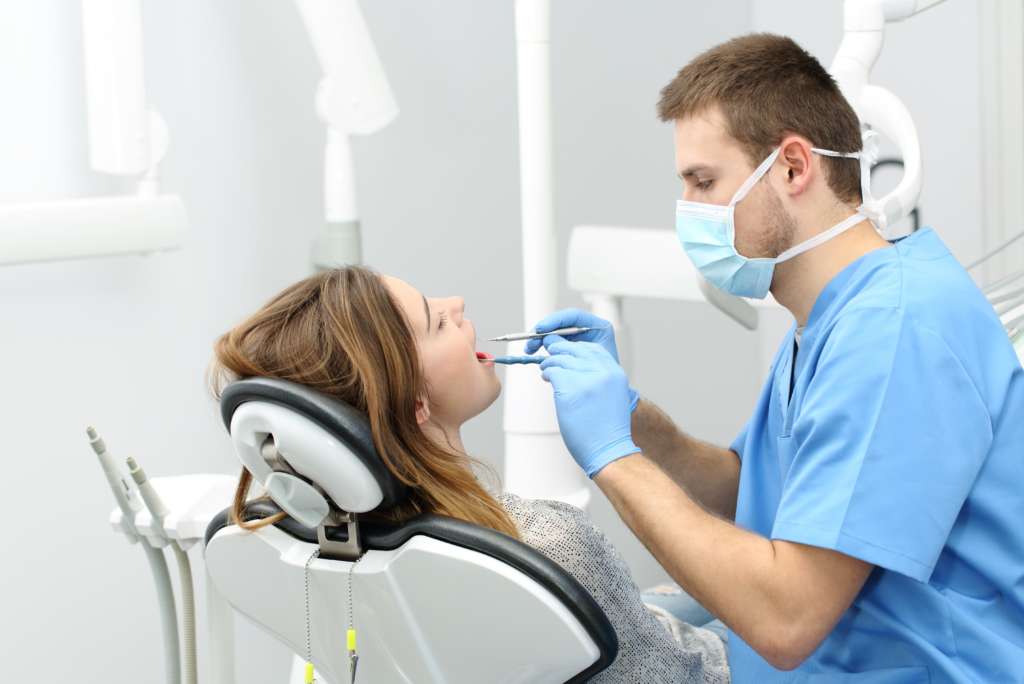

Populations with complex health care needs are at a higher risk for oral diseases and have poorer oral health outcomes compared to the general population. In particular, people with an intellectual or developmental disability (I/DD) experience significant barriers to dental care due to limited insurance coverage, a lack of providers and health care settings equipped to treat them, and other physical or cognitive impairments. As a result, individuals with I/DD are more likely to be denied oral health care, less likely to have seen a dentist, and more likely to rate their oral health care as poor.
Mounting evidence points to the critical role of oral health in overall health. As states seek to improve health outcomes and reduce health care costs for people with complex medical needs, improving access to dental services and improving integration of siloed dental and health care delivery systems can be high-value, cost-effective interventions. The National Council on Disability (NCD) estimates that implementing a Medicaid dental benefit for people with I/DD could result in cost reductions of $10.2 million for states and $17.1 million for the federal government. The following examples offer innovative approaches to increase access and links to dental services for people with intellectual or developmental disability.
Interventions to Increase Access to Care
Limited preventive Medicaid dental services, as well as a dearth of providers adequately trained or willing to people with I/DD can lead to an increase in advanced dental disease. Expanding comprehensive Medicaid dental benefits to patients with I/DD could lead to a reduction in emergency room visits for dental treatment as well as reduced costs for treating health conditions associated with a lack of routine preventive dental care.
- Oregon is phasing in expanded Medicaid benefits for Young Adults with Special Health Care Needs (YSHCN), including I/DD. Eligibility begins at age 20 in 2025, increasing yearly to cover those up to age 26 by 2030. Benefits include Early and Periodic Screening, Diagnostic, and Treatment (EPSDT) services, enhanced vision, and EPSDT-equivalent dental coverage. This expansion aids YSHCN in maintaining oral and overall health during their transition to adult services. Coordinated Care Organizations (CCOs) are actively educating providers about how to use this benefit as it rolls out.
- Louisiana is one of 12 states offering Medicaid dental benefits to adults 21 and older with I/DD who reside in an intermediate care facility or home- and community-based settings. Patients have access to comprehensive services, filling a gap in care for more than 12,000 people. Increasing access to Medicaid dental coverage can help more people with I/DD receive dental care, reduce costs, and improve quality of life.
Provider Education
States can leverage provider education and partnerships with dental schools to connect patients with I/DD to quality dental services. For example, the National Council of Disability cites provider surveys reporting hesitancy to treat people with I/DD due to lack of dental school training or misconceptions about providing dental care to people with I/DD. To remedy this knowledge gap, programs such as Penn Dental Medicine’s Care Center for Persons with Disabilities offer an opportunity for dental students to gain clinical experience treating patients with I/DD. Since people with I/DD may need additional supports, such as anesthesia, to receive care, Penn Dental Medicine’s dental suite features a “quiet room,” a six-chair open bay, and a wheel-chair lift room, among other customized features to meet patients’ needs and provide appropriate dental treatment.
Data-Informed Policy Strategy
States can also leverage data to better understand the barriers patients with I/DD experience when accessing dental care. The Tennessee Department of Aging and Disability commissioned the American Institute for Dental Public Health (AIDPH) and Harmony Health to conduct an analysis using data gathered from the Behavioral Risk Factor Surveillance System (BRFSS) and an accessibility audit to understand disparate oral health outcomes and barriers people with I/DD experience in Tennessee. As a result, the study recommended numerous policy strategies to increase access and improve oral health outcomes through Medicaid and care delivery.
Outlook and Future Opportunities
Systemic, financial, and social barriers all affect access to dental care. In response, states are developing new approaches to integrate care, increase coverage, and educate providers to improve oral healthcare and overall health outcomes for people with I/DD and other complex needs. Integrating dental care as part of a whole person approach, including investing in prevention and connections to care in primary care and community settings, is key to success.
Acknowledgments
The National Academy for State Health Policy (NASHP), with support from the CareQuest Institute for Oral Health, regularly convenes state officials to discuss strategies to address health disparities and implement best practices in oral health policies through minimally invasive care. NASHP staff would like to thank state officials from Oregon for their input on this blog post. Please reach out to Megan D’Alessandro (mdalessandro@nashp.org) with any questions or inquiries about joining the State Oral Health Policy Workgroup.