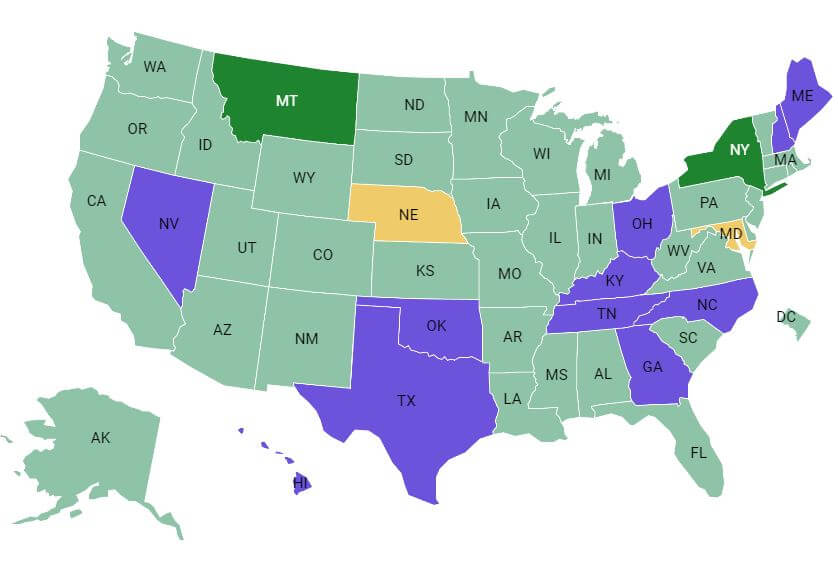
This information was compiled based on information from publicly available legislation, state memorandums or executive orders, state websites, and press releases, as well as supplemental interviews with state officials with a role in administering opioid settlement funding.
It offers a snapshot of settlement spending and priorities at the state level (e.g., funding administered by state agencies or designated statewide abatement funds) as well as laws, agreements, and processes that the state has established for allocating funds. NASHP does not track spending at the local or county level, but includes any relevant state-level reports or dashboards that capture local spending within a state. For details on the definitions used here, check out the definitions at the bottom of this page. You can also get an overview of opioid settlement decisions in all states.
Settlement Spending Status
Background
The Michigan Department of Health and Human Services (DHHS), responsible for administering settlement funds from the Opioid Healing and Recovery Fund, outlines settlement expenditures and proposed investments from the fund for previous and current fiscal years. Awards and proposed investments are categorized under targeted abatement categories such as prevention, treatment, and data, among other examples. Additionally, Michigan’s Opioid Advisory Commission (OAC) — tasked with providing annual recommendations to the governor, attorney general, and legislature on expenditures from the state’s share of settlement funding — publishes annual reports that include recommendations for legislative action related to opioid settlements.
Has the state awarded settlement funds?
Yes. The fiscal year 2025 ongoing appropriation and work report outlines $43 million in projects receiving funding, including details on the abatement category the work falls under, what the project entails, vendor receiving the funding, and amount of funding received. Example projects include technical assistance for jails implementing medication for opioid use disorder programs, naloxone, and recovery housing among others.
Has the state announced priorities or recommendations for spending?
Yes. In a 2025 update, Michigan DHHS proposed a spending plan of $60.5 million from the fund for fiscal year 2026, with the majority of funding directed toward the abatement categories of recovery, which includes housing programs and wraparound services, and treatment, which includes initiatives to increase workforce and remove barriers for peer recovery coach certifications. Additionally, OAC’s 2025 annual report includes short-, medium-, and long-term recommendations and legislative priorities related to the fund.
Previous spending details
Michigan’s Opioid Healing and Recovery Fund site outlines settlement investments, categorized into abatement categories such as prevention, treatment, and recovery, annually since 2023.
Statewide reporting of local spending
The Michigan Association of Counties has a dashboard with county-level settlement details, including funding breakdowns and various planning and funding priorities. The dashboard will soon feature funded strategies and public-facing spending reports.
State Settlement Website or Dashboard
Process for Settlement Disbursement
State and Political Subdivision Split
Structure
Split (no institution controls more than 50 percent of funds)
Allocation Formula
50 percent state share, 50 percent local government share
Role of Advisory Committee
The Opioid Advisory Commission makes recommendations to the governor, attorney general, Senate majority leader, and speaker of the House.
State Annual Report
State Overviews
Awarded settlement funds: A designated state agency or statewide opioid abatement fund has published its intention to allocate a dollar amount to a specific abatement program, activity, strategy, service, or support OR an appropriation of settlement funds has been made through a legislative process. Due to the nature of budgeting and procurement processes, this funding could be in the process of being budgeted, obligated, expended, or disbursed.
Published general priorities or recommendations to guide spending: A state agency, abatement council, or advisory council has published priority areas of focus or recommended strategies to address the opioid crisis with settlement dollars but may or may not have allocated settlement funding yet.
Statewide reporting of local spending: NASHP will not be tracking every spending example at the local level, but this category includes states that have published dashboards or reports that include local expenditures.