This information was compiled based on information from publicly available legislation, state memorandums or executive orders, state websites, and press releases, as well as supplemental interviews with state officials with a role in administering opioid settlement funding.
It offers a snapshot of settlement spending and priorities at the state level (e.g., funding administered by state agencies or designated statewide abatement funds) as well as laws, agreements, and processes that the state has established for allocating funds. NASHP does not track spending at the local or county level, but includes any relevant state-level reports or dashboards that capture local spending within a state. For details on the definitions used here, check out the definitions at the bottom of this page. You can also get an overview of opioid settlement decisions in all states.
Settlement Spending Status
Background
The Indiana Family and Social Services Administration (FSSA) Division of Mental Health and Addiction is appropriated 35 percent of total opioid settlements received by the state for approved state abatement programs. FSSA, in partnership with the Office of Drug Prevention, Treatment, and Enforcement and other state agencies, proposes settlement allocations through a state spending plan, which then goes to the state budget committee for approval. Yearly reports from FSSA outline which opioid abatement strategies were funded as a result of the proposed spending plan, including details on how the funding was distributed through grant opportunities.
Has the state awarded settlement funds?
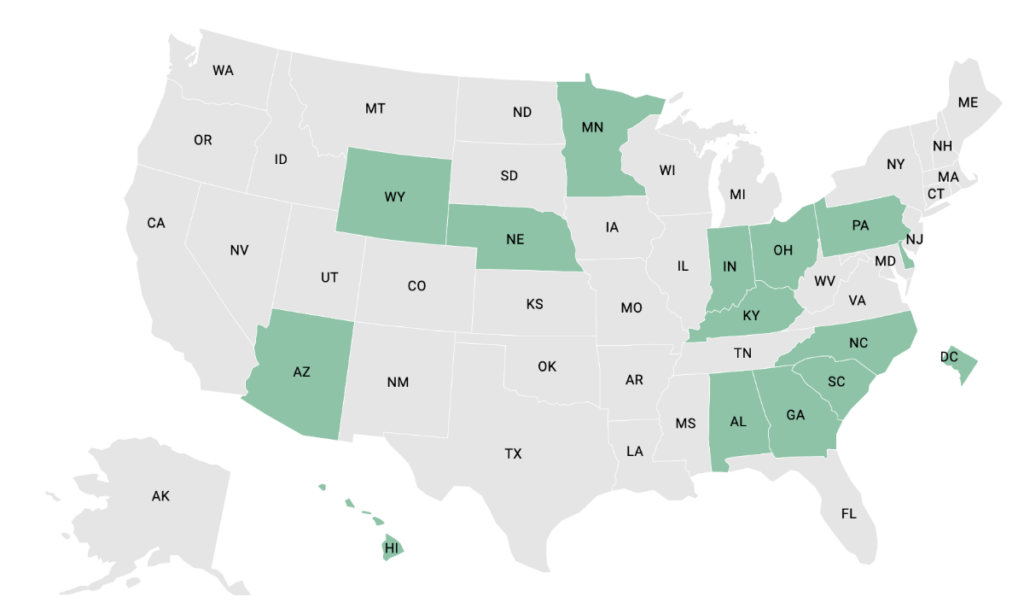
Yes. The 2024–2026 spending plan proposes allocations totaling $46 million to a variety of opioid abatement-related programs, including a match opportunity for local governments funding evidence-based programs, transitional housing, and various treatment programs catering to different target populations, among others. The 2024 FSSA annual report highlights specific grant programs that have been supported by state settlement funding as of October 2024.
Has the state announced priorities or recommendations for spending?
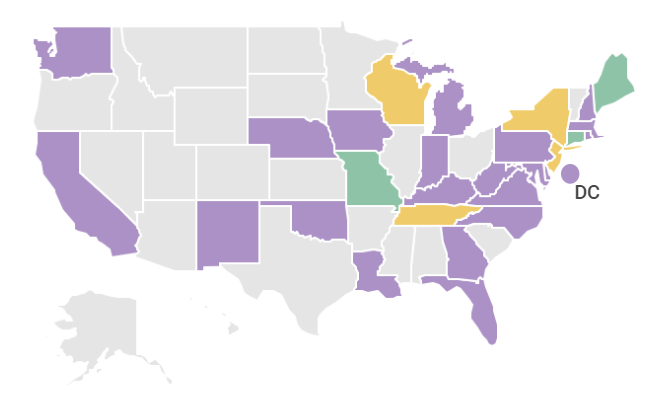
Yes. The Indiana Commission to Combat Substance Use Disorder created a list of recommendations to assist localities in efficiently spending the share of funding restricted to “best practice” programs as identified by the settlement legislation. These recommendations outline resources and suggestions for creating a local advisory council, conducting a needs assessment, and spending dollars in accordance with Exhibit E, among other examples. The recommendations also clarify items that are not allowable expenses under Exhibit E.
Previous spending details
The 2023 Annual Report highlights some examples of projects funded throughout the year, along with other relevant information, such as local units of government reports. One example project includes $19 million in one-time funding for a matching program for local efforts, in which 30 grantees were awarded for their proposed projects. Additionally, $4.7 million was designated to increase capacity of recovery residences, and $5.5 million was designated to expand the certified peer support professional workforce across the state.
Statewide reporting of local spending
Half of Indiana’s settlement funding goes to local units of government; these recipients are required to report on the use of their funding to the Indiana Family and Social Services Administration. The most recent report of local government settlement spending is available on the state’s site.
State Settlement Website or Dashboard
Spending Plans and Agreements
Not applicable.
Process for Settlement Disbursement
Legislation requires the state share of funding to be appropriated each year to the Office of the Secretary of Family and Social Services. The legislature’s Budget Committee must approve the Secretary’s spending plan in order to disburse to the Secretary the 35% of the share set aside for programs defined in the settlement.
State and Political Subdivision Split
Structure
Split (no institution controls more than 50 percent of funds)
Allocation Formula
15% State, 35% to the state to be used for treatment, prevention, and education as defined by the settlement, 15% cities, counties, and towns, 35% to cities, towns, and counties to be used for programs defined as best practices by the settlement.
Role of Advisory Committee
Not applicable.
State Annual Report
State Overviews
Awarded settlement funds: A designated state agency or statewide opioid abatement fund has published its intention to allocate a dollar amount to a specific abatement program, activity, strategy, service, or support OR an appropriation of settlement funds has been made through a legislative process. Due to the nature of budgeting and procurement processes, this funding could be in the process of being budgeted, obligated, expended, or disbursed.
Published general priorities or recommendations to guide spending: A state agency, abatement council, or advisory council has published priority areas of focus or recommended strategies to address the opioid crisis with settlement dollars but may or may not have allocated settlement funding yet.
Statewide reporting of local spending: NASHP will not be tracking every spending example at the local level, but this category includes states that have published dashboards or reports that include local expenditures.