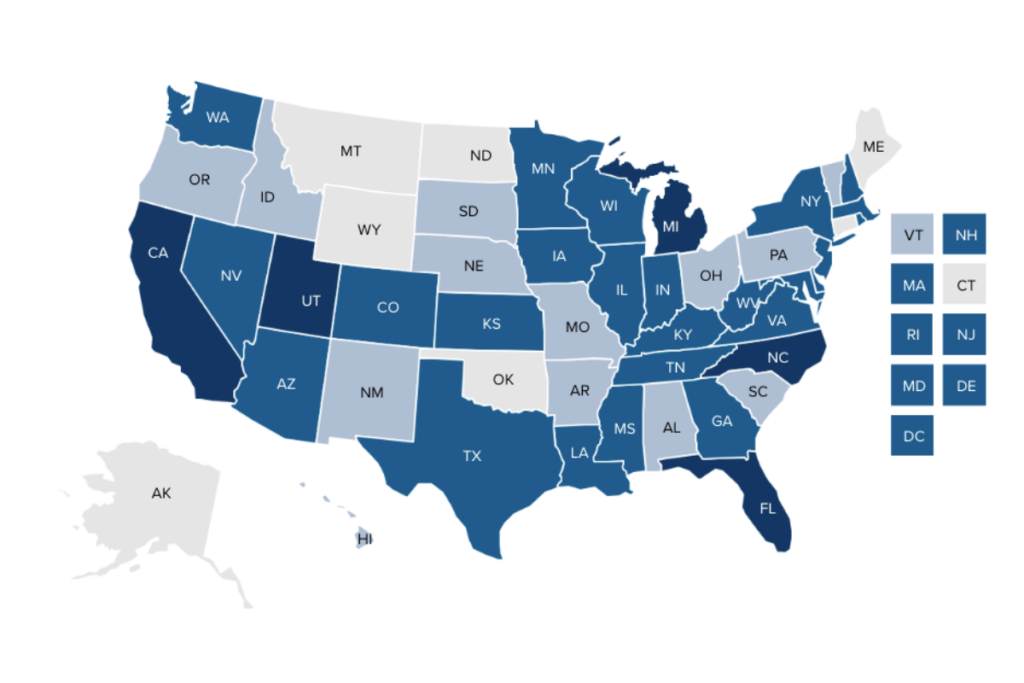

This information was collected through a combination of state surveys and NASHP staff research. It offers a snapshot of how the state is defining, training, certifying, and paying for the CHW workforce — as well as how the state is developing cross-agency and state-to-local strategies to improve community health in partnership with CHWs.
This is a dynamic policy space, and states are continuing to develop new approaches. We will continue to make periodic updates to this page. Learn more about state CHW policies across the U.S.
State CHW Definition
The Maine Department of Health and Human Services (DHHS) CHW Steering Committee and the Maine CHW Initiativedeveloped a CHW definition adapted from Maine’s State Innovation Model grant and American Public Health Associationdefinitions: “A trusted frontline public health professional, who applies their unique understanding of the lived experiences, socioeconomic needs, language, and culture of the communities they serve.
A Community Health Worker:
- Acts as a bridge between providers and individuals to promote health, reduce disparities, and improve service delivery
- Empathizes with and advocates for individual and community needs
- Helps to build individual, family, and community capacity by increasing health knowledge and self-sufficiency through a range of activities such as outreach, community education, informal counseling, social support, and advocacy.”
The definition has been reviewed by the commissioner of Maine DHHS and is in process of being adopted by Maine DHHS programs.
State CHW Governance
Maine does not have a dedicated state office of CHWs. The Maine Department of Health and Human Services supports CHW initiatives within the state.
Certification and Training
The Maine CHW Initiative has partnered with the International Certification and Reciprocity Consortium to launch the Maine CHW Certification. The state also offers a legacy certification path for CHWs with previous experience.
MCD Global Health is the primary CHW training organization in Maine. The training program consists of interactive training modules and resources in both English and Spanish related to the prevention, management, and self-management of chronic conditions.
Several health care systems in Maine contract with the Penn Center for Community Health Workers to implement the IMPaCT model, which includes training for CHWs and supervisors.
Medicaid Reimbursement
Through a Medicaid State Plan Amendment, Maine’s Medicaid program, MaineCare, incorporates CHW services into its alternative payment model, Primary Care Plus (PCPlus). The PCPlus program is structured on three tiers with potential reimbursement rates increasing for each tier. Participating primary care practices must provide CHW services, among the other requirements, at Tiers 2 and 3.
MaineCare pays for some CHW services through its Medicaid Community Care Teams program, in which services are funded through a per-member per-month (PMPM) payment. Community Care Teams have the option to employ a CHW as an additional staff member. The PMPM payment allows Community Care Teams to fund CHW services/positions.
Opioid Health Homes have the option to employ a CHW as a patient navigator team member, which is reimbursed under the PMPM payments to the Opioid Health Home. CHWs are also covered under other MaineCare services provided through Community Care Teams, Housing Outreach and Member Engagement Services, MaineMOM, and Certified Community Behavioral Health Clinics.
Rural Health Transformation
Through its Rural Health Transformation Program, Maine will leverage federal funding to further support CHWs in statewide health improvement efforts. The state will provide a focused investment in CHWs to serve rural communities by delivering targeted interventions and bridging the gap between individuals and health care providers.
The state Center for Disease Control and Prevention will deploy CHWs across a variety of care settings. In schools, it can encourage children and families to engage with school health offerings, while in other settings it can help vulnerable populations access telehealth and other consumer-facing technology innovations. The state will also continue to support contractual relationships between community-based organizations employing CHWs and health care entities under alternative payment models. RHTP funds will also support professional association infrastructure, as well as training and certification needs for the statewide workforce.
Other Funding or Financing Mechanisms
Maine DHHS has leveraged a wide range of state programs focused on improving public health, behavioral health, and the health of children and families. These include:
- Maine School Oral Health Program
- Chronic disease prevention programs (asthma, diabetes, cardiovascular disease)
- Division of Population Health Equity
- Psychosocial supports (StrengthenME)
- Children’s telebehavioral health
- Early childhood education programs
Key Partnerships
The Maine DHHS CHW Steering Committee was established in 2024 and seeks to improve coordination and collaboration across state programs and the CHW profession to support effective policies and programs. The committee includes both Maine DHHS representatives and CHW leaders not affiliated with Maine DHHS, with the goal that 50 percent of the committee members identify as CHWs.
The Maine Community Health Workers (MECHW) initiative is a statewide network comprised of more than 50 percent CHWs (in its leadership and membership) that seeks to create a future in which CHWs are universally recognized and supported across systems of care in Maine.
State CHW Legislation
Information is unavailable.
State Resources
ACO – Accountable care organization
AHEC – Area Health Education Centers
APHA – American Public Health Association
APM – Alternative payment model
CBO – Community-based organization
CDC – Centers for Disease Control and Prevention
CDC CCR Funding – Community Health Workers for COVID Response and Resilient Communities Funding
CHR – Community health representative
CHW – Community health worker
CPT Codes – Current Procedural Terminology Codes
C3 Project – CHW Core Competency Project
FFS – Fee for services
HCSPCS Codes – Healthcare Common Procedure Coding System Codes
HRSA – Health Resources & Services Administration
MCO – Managed care organization
NACHW – National Association of Community Health Workers
SDOH – Social determinants of health
VBP – Value-based payment
State CHW Definition: This category indicates where states have a formal definition of a CHW. In some cases, where there is not a definition in statute, this category may draw information from provider manuals and state websites or reports.
Certification and Training: This category includes information about how CHWs are trained in the state, which entities provide training, whether or not the state runs or recognizes a CHW certification program, and information about the entities that administer existing certification programs.
Medicaid Reimbursement: This category includes information about state Medicaid strategies that provide enrollees access to CHW services. Entries indicate whether state Medicaid programs currently reimburse for CHW services or incorporate CHWs into alternative payment models under the authority of a state plan amendment (SPA), or where states have earmarked funds to support CHW services under the authority of an 1115 demonstration waiver. It also indicates where CHW services might be supported through managed care approaches (e.g., where MCOs are paying for CHW services using administrative dollars or where states are using managed care contracts to incentivize or require MCOs to cover CHW services).
Other Funding or Financing Mechanisms: This category includes information about other state funding or financing approaches that cover CHW services or CHW positions. It includes information about federal grant dollars for which the state is the grantee.
Key Partnerships: This category offers information about key partners outside state government, including state CHW associations and CHW training entities, and highlights formal cross-agency partnerships within the state that support alignment of funding and resources for the CHW workforce.
State CHW Legislation: This category highlights any state legislation relevant to the CHW workforce. This might include statutory language directing agencies to develop a Medicaid reimbursement approach, laws that established state CHW certification, or other relevant statutes.
State Resources: This category offers links to any key reports or resources that states elected to highlight as critical to CHW policy and partnership.