

This series is part of a spotlight on members of NASHP’s Academy, showcasing the expertise and leadership they bring to advancing state health policy. Each feature offers a closer look at their work and the meaningful contributions they make to NASHP’s mission.
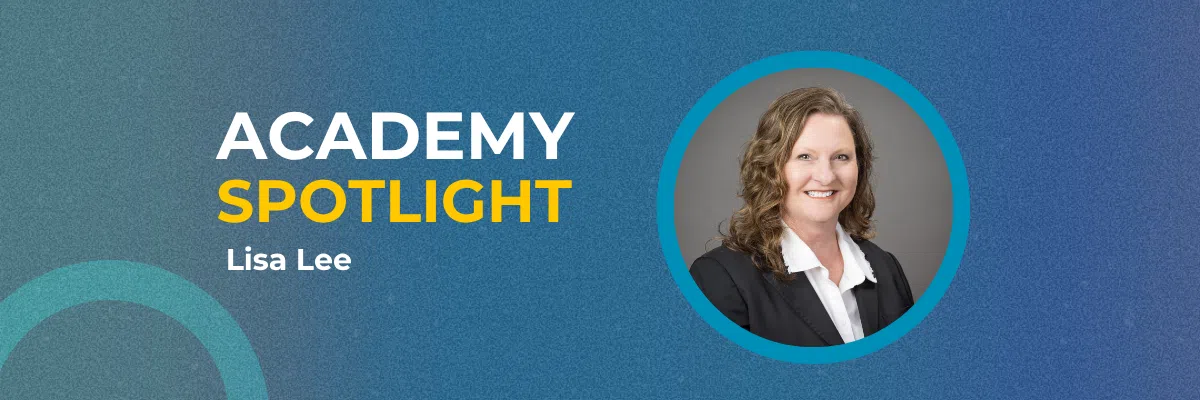
For Lisa Lee, Medicaid leadership begins with the people and communities the program serves. From her early days answering member calls to her current role as Commissioner of the Kentucky Department for Medicaid Services, she has carried a perspective grounded in access and real-world impact. In this Q&A, Lisa reflects on how those experiences continue to shape her approach to enrollment, data-driven decision-making, and policy design — and why staying connected to members is essential.
How did you first find your way into Medicaid work? What kept you in this field?
At first, I didn’t know Medicare from Medicaid. I started as a member services representative and was on the call lines every day. I talked to members looking for medications, or who needed to find a doctor, or whose child was sick. They just needed help navigating the system. Talking to members made me realize how important this program is to those individuals who rely on it. The more I learned about Medicaid, the more I learned it is so vital to everybody we serve.
How do you personally define success for Medicaid programs at a time when states are balancing fiscal pressure, federal policy shifts, and evolving health needs?
We’re here to provide a service to the 1.4 million enrollees, and I look at the data to see if we’re making a difference. Lately, we have been reporting data that shows the overdose deaths in the state of Kentucky have declined over the fourth consecutive year. Medicaid has been a big part of that success because we cover so many individuals and are the largest payer of behavioral health services. I also define success as hearing stories from some of our members. Medicaid is a massive program, so we often hear about things that are not going right. But now and then, I get a thank-you note from a member or from a provider telling us how Medicaid has helped them. To me, those stories demonstrate that the program is successful.
States increasingly use data not just for reporting, but for real-time decision-making. How is Kentucky using data differently today than it did even a few years ago?
A few years ago, much of our focus was on retrospective reporting — tracking how many claims were paid, how many members were enrolled, or how many services were delivered. While those measures remain important, our use of data has evolved significantly.
Today, we are leveraging increasingly sophisticated analytics to better understand health outcomes and identify opportunities for earlier intervention. With access to millions of claims records and enhanced data capabilities, we can now analyze trends longitudinally, allowing us to follow an individual’s health care journey over time rather than viewing each service as an isolated event.
For example, instead of simply reporting how many individuals have diabetes, we can identify whether they are receiving recommended preventive care, such as regular A1C testing, and pinpoint populations that may be experiencing gaps in care. This enables us to target outreach, education, and care management efforts where they can have the greatest impact.
Our goal is to move beyond measuring activity and toward measuring outcomes. By using data to better understand the needs of our members, we can make more informed policy decisions, improve the effectiveness of our programs, and help Kentuckians access the information and services they need to achieve better health.
What is one Kentucky Medicaid initiative that you think could offer lessons for other states?
One thing that I’m really proud of goes back to when we implemented the Children’s Health Insurance Program (CHIP). In Kentucky, Governor Beshear reminds us that health care is a basic, fundamental, and human right. We do a really good job getting individuals enrolled in the program. We have a robust outreach program, and we currently have one of the lowest uninsured rates in the nation. Keeping people in the program is another thing we do really well. We have a sophisticated, integrated eligibility and enrollment system (IEES). We have access to a variety of databases, so when an individual applies for Medicaid, we can check their income so there’s less burden on that individual to get proof that they qualify.
How has NASHP’s network of state leaders helped shape your work?
I got involved with NASHP over 20 years ago. NASHP helped me as a CHIP director when Kentucky was one of the last states to eliminate the face-to-face interview eligibility requirement. There were children out there who did not have health care, so we embarked on a journey to find and enroll as many children as we could. I reached out to all the CHIP Directors I met during NASHP’s conference and said, “I have got to create a paper application.” Every one of them gave me their applications. We took the best of the best and created an application specific for Kentucky in 2008. In 2014, when we expanded Medicaid, that application was used as the basis for our online application.
You sit on the Academy’s Child and Family Health Steering Committee. What do you see as the biggest opportunity right now to strengthen children’s health outcomes through public coverage programs?
Maintaining coverage for children is very important, and then once they’re enrolled, making sure their parents or caregivers know what services they get, what they are entitled to, and how to access those services. There’s a conversation right now, among many states, about children with complex health care needs, children with behavioral health issues, and the lack of providers to deliver those services. Those conversations are very important to helping us identify gaps in care and leaning on each other to say, what’s working in your state? How can we build that in this state and build a better system of care for our children?
NASHP’s 40th Annual Conference will be held in Kentucky next year. What does it mean to you to welcome state health leaders from across the country to your home state?
Welcoming NASHP’s 40th Annual Conference to Kentucky is both a professional and personal honor for me.
Professionally, NASHP has played an important role in my career and development as a Medicaid leader. Throughout the years, it has provided invaluable opportunities to learn from colleagues across the country, share ideas, and identify innovative approaches to common challenges. Some of the most effective policies and initiatives come from states learning from one another, and NASHP has long been a catalyst for those connections. I would not be where I am today without the relationships, knowledge, and support I gained through that network.
On a personal level, I am excited for attendees to experience Kentucky firsthand. I am incredibly proud of our state — our people, our culture, our hospitality, and our rich traditions. Beyond the conference sessions, I hope visitors take time to enjoy our food, music, history, and natural beauty. Kentucky has so much to offer, and I look forward to sharing the authentic Kentucky experience with state health leaders from across the nation.
What leadership qualities do you think will matter most for the next generation of state health leaders?
Having empathy for people less fortunate. I’m from Eastern Kentucky; I was the youngest of 13 children. We did not have a lot, and I can relate to the individuals we serve. Also, wanting to truly make a difference in the lives of those that we serve and the world around us, so we leave this place better for our children, our grandchildren, and the next generation. That’s one thing with Medicaid: we want to make sure we’re operating it efficiently and effectively, so that we can leave a good foundation for those who come after us.