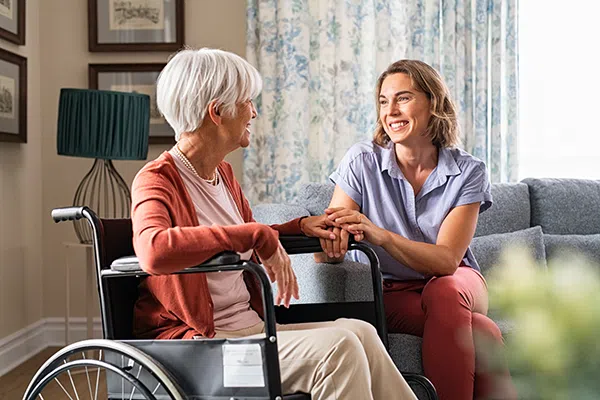

Most states — 38 states plus the District of Columbia — support working family caregivers of older adults and people with physical disabilities through some form of public policy, including policy that helps private businesses support and retain working family caregivers. Federal policy, such as tax breaks and family and sick leave, can serve as a national baseline from which states can build caregiving policies.
A family caregiver is defined as “an adult family member or other individual who has a significant relationship with, and who provides a broad range of assistance to, an individual with a chronic or other health condition, disability or functional limitation.” (RAISE Family Caregivers Act, 2018)
Family caregivers are major providers of long-term services and supports (LTSS), contributing an estimated $600 billion of unpaid care in 2021.
In the United States, one in four people identify as a caregiver (Caregiving in the US, 2025).
Why Are States Supporting Working Caregivers?
As the population ages, the ratio of available family caregivers to older adults in need of assistance is expected to decline significantly, increasing stress and strain on caregivers and their employers. To address this, many states are collaborating with businesses, communities, and organizations to better support working caregivers.
These efforts include educating employers on the value of working caregivers, and implementing policies that provide flexible options for time off and financial assistance, which can ultimately promote economic stability and workforce retention.
States and Employers Can Work Together to Support Working Family Caregivers in Public-Private Partnerships
Approximately 80 percent of private sector employers offered paid leave benefits in 2025. Employers may also offer other types of benefits for caregivers, such as information about caregiver supports, care coordination and referrals, employee assistant programs (EAPs), support groups, or subsidies for caregivers who need backup care. However, uptake of benefits may be low.
For example, in 2021, while 51 percent of companies sponsored an EAP benefit, reported employee utilization of EAPs appears low. States and employers have an opportunity to collaborate on outreach campaigns to improve awareness of paid and unpaid leave, information and referrals, and other available supports for family caregivers.
“Workplace flexibilities ease caregiver concerns about employment and can reduce worker withdrawal from the workforce.”
State Outreach and Marketing to Employers
States can engage in outreach and marketing efforts targeting businesses that employ working family caregiver and develop and disseminate resources to help employers better understand and support the needs of their employed caregivers. These resources could include:
Resource Guides for Working Caregivers
Minnesota Board on Aging’s pamphlet for working caregivers is an easy-to-read resource that employers can share with employees.
Toolkits for Employers
Massachusetts’ “Caregiver Employer Toolkit” includes a wide range of resources for employers, sample questionnaires for caregivers, best practices, and state-specific resources. Massachusetts also collaborates with the state’s caregiver coalition, comprised of employers and other stakeholders.
New York’s “Help for Working Caregivers” toolkit includes best practices, resources, and data on working caregivers across the state.
Wisconsin’s “HRCareKit” includes tailored suggestions for employers based on data from working caregivers in the state.
Employer and Family Caregiver Surveys
The Wisconsin Family and Caregiver Support Alliance (WFACSA) and UW-Madison Division of Extension surveyed employers and working caregivers, creating a simple infographic of the results that can be used for outreach and education.
Acknowledgments
This brief was written with support from The John A. Hartford Foundation. We thank members of the AARP Public Policy Institute and The Center for Advancing Caregiver Financial and Workplace Security at the University of Southern California (USC) Leonard Davis School of Gerontology for their input and collaboration.