The U.S. continues to experience a rise in the number of maternity care deserts — places with no hospitals or birth centers offering obstetric care and obstetric providers. As of 2024, 35 percent of U.S. counties (both rural and urban) are considered to be maternity care deserts, which affect over two million women of reproductive age and 150,000 babies, according to the March of Dimes report, Nowhere to Go: Maternity Care Deserts Across the US. Living in a maternity care desert often results in longer travel times to care, contributing to poorer maternal health and birth outcomes.
During NASHP’s 2025 Annual Conference session “Finding Oasis in the Desert: How States are Ensuring Access to Maternity Care in Rural and Urban Areas,” state officials and health services researchers highlighted innovations and strategies for ensuring quality access to maternity care in shortage areas. The panelists discussed maternity care access broadly, including rural and urban barriers to care along with opportunities to improve access to quality, timely care such as improving care coordination through hub-and-spoke models, implementing maternity care payment redesigns, and leveraging cross-agency partnerships.
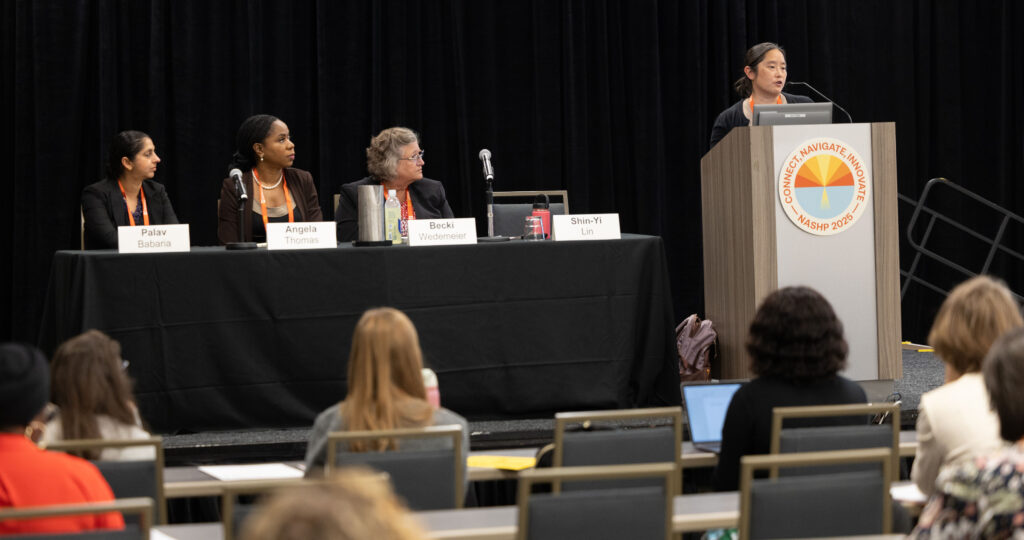
Session attendees learned about a state financing and payment strategy to unbundle global payments to allow providers to receive per visit payments and pregnant women to receive up to 14 visits without prior authorization. Another panelist shared an innovative public-private partnership, MedStar Health’s Safe Babies Safe Moms Program, a clinical care model that provides obstetrics and midwifery care through a partnership between a foundation, a hospital health system, a Federally Qualified Health Center (FQHC), and other partner entities.
In addition to the conference workshop session, NASHP also convened an ancillary in-person meeting of the eight states participating in its Maternity Care Deserts Policy Academy. During the full-day meeting, participating policy academy states focused on the following three priority areas:
- Assessing the Extent and Impact of Maternity Care Deserts through Data Mapping and Other Related Strategies: States are working to better understand the complexity of access to maternity care services across their state and local jurisdictions. States are leveraging available data (e.g., Medicaid claims and encounter data) to map maternity care services across the state as well as determine travel times for women living in a maternity care desert. Several states are going beyond data mapping to assess the impact of hospital closures and/or provider shortages on maternal and birth outcomes (e.g., rates of maternal morbidity and stillbirths). By investing in these efforts, states can more readily identify gaps in their existing perinatal health care system and develop targeted policy solutions.
- Leveraging New and Enhanced Delivery Models to Increase Access to Maternity Care Services and Supports: States continue to implement various strategies to increase access to maternal health services, particularly for women living in a maternity care desert. These strategies are multi-pronged and include both new and longstanding approaches. Some states are looking to mobile maternity care units and regional care delivery models to re-establish obstetric services in key shortage areas, whereas others are investing in greater telehealth capability, such as maternal fetal medicine interprofessional consultation. Many states are also exploring how to engage and support FQHCs, rural and community health centers, and birthing centers to provide needed maternity care.
- Supporting Payment and Financing Strategies to Improve Access to Perinatal Care in Maternity Care Deserts: As states continue to prioritize improving maternal health outcomes, they are working to implement financing strategies to maintain, sustain, and strengthen access to quality maternity care services while also considering state budget priorities and cost savings. Several states are implementing or refining their value-based payment arrangements within their state Medicaid programs to incentivize quality maternity care. States are also considering opportunities within the Rural Health Transformation Program to invest in time-limited innovations to improve maternity access in rural areas.
As maternity care deserts continue to affect maternal health outcomes, states have the opportunity to implement policy strategies that can improve access to quality maternity care services and providers. NASHP will continue to work with and support states, including through our Maternity Care Deserts Policy Academy, as they seek to better understand the impact on pregnant women and advance policy innovations to address maternity care deserts.
Acknowledgments
NASHP wishes to thank Dakota Staren for her work on the Annual Conference session “Finding Oasis in the Desert: How States are Ensuring Access to Maternity Care in Rural and Urban Areas.”
This case study is a publication of the National Academy for State Health Policy (NASHP). This project is supported by the Health Resources and Services Administration (HRSA) of the U.S. Department of Health and Human Services HHS under the Supporting Maternal and Child Health Innovation in States Grant No. U1XMC54191; $396,167. This information, content, and conclusions are those of the authors and should not be construed as the official position or policy of, nor should any endorsements be inferred by HRSA, HHS, or the U.S. government.