

Twenty-four states have a palliative care advisory council, coalition, or task force created through state legislation or regulation to guide work to support and expand care for those with serious illness. We talked to leaders of active and longstanding councils in Maine, Maryland, and Texas to learn about their creation, impact, and lessons learned for states looking to do the same.
What Is Palliative Care?
Palliative care is team-based medical care that can provide relief from the stress and symptoms of serious illness. Services such as pain management, care planning, and care management can help people — at any stage of illness — maintain quality of life and avoid unnecessary and often unwanted treatment. See NASHP’s Palliative Care Explainer to learn more and find strategies to educate the public on palliative care. See NASHP’s blog post Palliative Care: FAQs for State Policymakers for answers to common questions on state policy and palliative care.
While the membership, composition, and specific goals of the councils may vary by state, they tend to share an overarching purpose of expanding awareness of and access to serious illness care in states. Many of the councils engage in activities such as advancing palliative care legislation, creating reports on the status of palliative care in the state, helping to bring awareness and education to the public on palliative care, and providing recommendations to expand access to palliative care in the state.
Though almost half of states have these councils, activity levels of the councils — which were affected by the COVID-19 pandemic and other challenges — vary greatly. Strong and active advisory councils are uniquely designed to bring together clinicians, advocates, health plans, and state officials to both make recommendations to the legislature and relevant state agencies and communicate and collaborate with the public. Having an independent council can be advantageous to states because they ground palliative care policy recommendations in expertise and experience, particularly in this newer and emerging field.
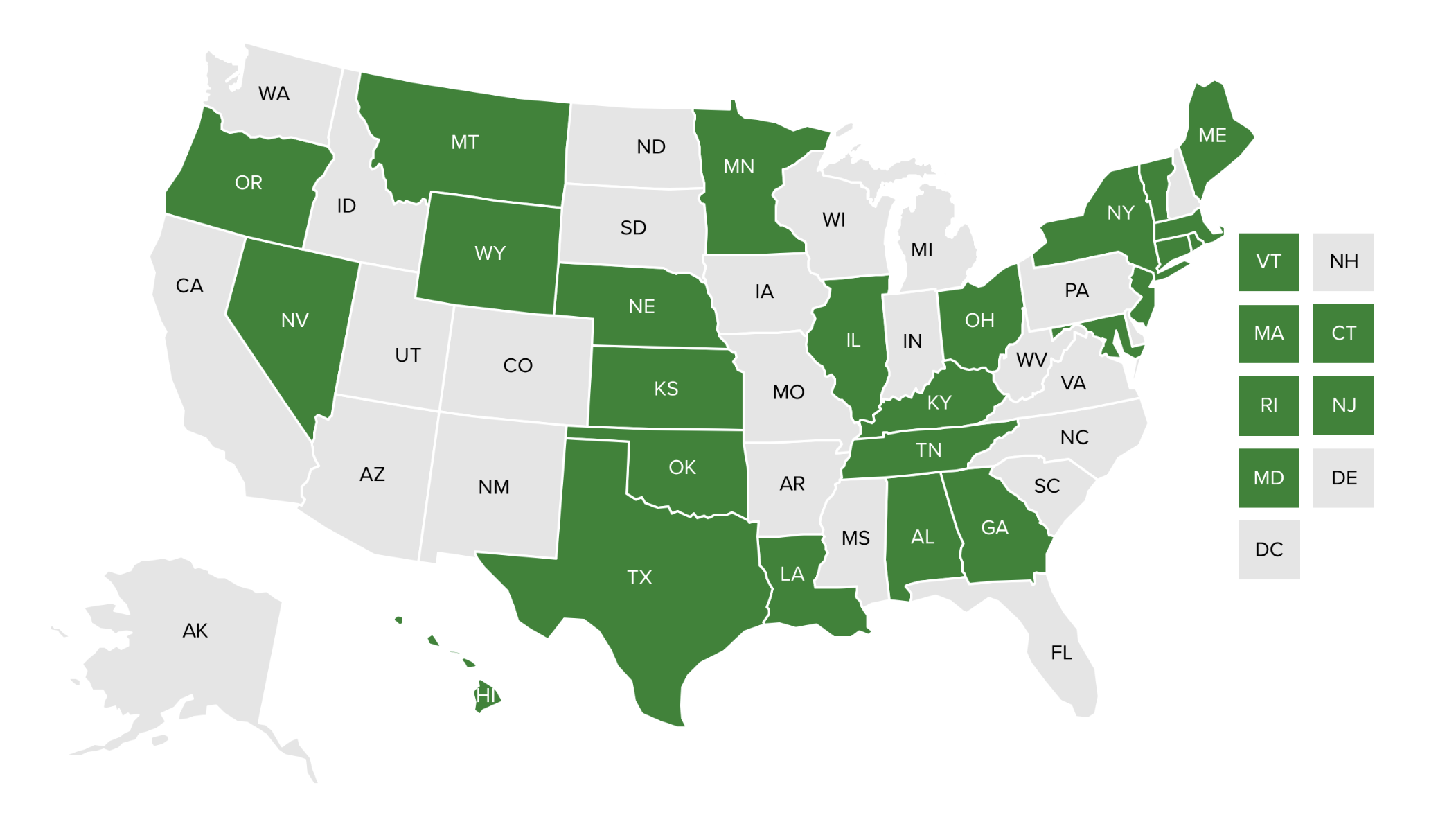
Learn more about the states that have councils, including their establishment and activity, on NASHP’s Palliative Care Advisory Task Forces Tracker.
State Councils of Focus
The councils in Maine, Maryland, and Texas — three of the six states in NASHP’s Serious Illness Institute — have guided their states in making significant progress in palliative care, though they differ in their age, structure, and path to progress. Leaders of these active, strong councils shared insights for states looking to create or strengthen a council.
The table below provides background information on the councils of focus.
| Maine | Maryland | Texas | |
|---|---|---|---|
| Council Name and Website | Palliative Care and Quality of Life Interdisciplinary Advisory Council | State Advisory Council on Quality Care at the End of Life | Palliative Care Interdisciplinary Advisory Council |
| Year Founded | 2015 | 2002 | 2015 |
| Founding Legislation or Regulation | LD 782 | State Code, §§13-1601-13-1604 | HB 1874 |
| Convening Organization/ Office | Maine Hospice Council | Maryland Office of the Attorney General and the Maryland Department of Aging | Texas Health and Human Services Commission (HHSC) |
| Funding | No state funding but can apply for funding from outside sources. | The authorizing statute provides for reimbursement for travel expenses, but there is no appropriation in the state budget to make a department responsible for these expenses. Council is dependent on whatever staff and technical assistance may be provided by the Attorney General’s Office and the Department of Aging within their existing budget resources. Can apply for outside funding. | State-funded via general appropriations for state administration of council and council member travel expenses and can apply for funding from outside sources. |
| Requirements | Annual report | None | Biennial report |
| Cadence | 2 meetings/year | 2 meetings/year | 4 meetings/year |
| Members | 10 members appointed by legislative leadership and 3 by Maine Hospice Council, as specified in original legislation. 1 patient/family/consumer representative added in 2023 by statute amendment (14 total). | 23 members, each as specified in the establishing state code. | 18 members appointed by the HHSC executive commissioner and as outlined in legislation. |
| Key Deliverables and Legislation |
|
|
|
Maine
The Palliative Care and Quality of Life Interdisciplinary Advisory Council in Maine was created in 2015 by legislation and without designated state funding. The council is organized and convened through the Maine Hospice Council, rather than the council sitting as a separate entity. The well-established Maine Hospice Council and its leadership’s strong relationships within the state helped facilitate the creation of the palliative care council. The council can apply for outside funding through the Maine Hospice Council. The council’s members spent their first years learning more about palliative care in Maine, including completing a needs assessment and holding listening sessions with involved partners. Next, they worked to pass 2021 legislation to create a Medicaid benefit for palliative care, which is currently being developed by MaineCare and in collaboration with the council and NASHP’s Serious Illness Institute. Looking ahead, the council will support the implementation of the Medicaid benefit through messaging and marketing the benefit to families, patients, and providers.
Maryland
The State Advisory Council on Quality Care at the End of Life in Maryland was written into state code in 2002, making it the longest standing current council of its kind in the country. The Office of the Attorney General, driven by then-Assistant Attorney General Jack Schwartz and then-Attorney General Joe Curran, was working on advance care planning and health decisions policy. The Office of the Attorney General created the council as a permanent way for engaged partners to make recommendations to state agencies and the legislature on end-of-life care.
Serious illness care progress in the state, driven by the council, includes the Medical Orders for Life-Sustaining Treatment (MOLST) form and advance directives and advance care planning. The council supports the Palliative Care Services Workgroup, created by 2022 legislation and run by the Maryland Health Care Commission, to study palliative care in the state and make recommendations to state agencies and the legislature. As a member of NASHP’s Serious Illness Institute, Maryland is determining how to use the recommendations to best expand palliative care in the state. The council has received no funding over its two decades of work.
Texas
The Palliative Care Interdisciplinary Advisory Council in Texas was established in 2015 by legislation, which included a definition of palliative care and language for the council’s work to include an awareness and education program. The council operates as an advisory committee of the Texas Health and Human Services Commission and receives funding through the state’s general appropriations for administrative oversight and council members’ travel expenses. Engagement from stakeholders and champions with professional and personal experience with serious and terminal illness care drove the council’s creation.
The council helped to enable the passage of legislation in 2019 to define supportive palliative care and allow the council to receive funds externally. The council also released recommendations in 2022 to the legislature to expand palliative care in Texas and held its first annual Supportive Palliative Care Awareness Day in 2023. Each year, the council hosts an annual continuing education event, at which it has provided over 6,000 continuing education hours on palliative care. The council is part of Texas’s team participating in NASHP’s Serious Illness Institute to explore coverage of a palliative care pilot within Medicaid managed care.
Lessons Learned
Advisory councils — in coordination with state agencies and legislatures — have the power to bring progress and change.
As demonstrated by the palliative care accomplishments in each of these states, strong state advisory councils can help advance care for those with serious illness. Convening those who are most passionate and knowledgeable about palliative care in a formal council creates opportunities to collectively make recommendations to and support the work of the state.
“Since the council’s inception, we have had a bill pass every legislative session. … We are a prime example of when an expert interdisciplinary council works collaboratively together, the consumers and clinicians all benefit from modernized policy for vulnerable supportive palliative care patient populations. I have high hopes for the future of Texas supportive palliative care,” said the Texas council chair.
Councils are stronger when they work alongside state agency policymakers and interested state legislators. Successful states and councils turn to one another for guidance and knowledge as they develop policies and recommendations that affect those with serious illness. Building strong connections between the council, the legislature, and relevant state agencies helps to establish the council as a legitimate source of expertise and creates opportunities to advance palliative care.
“I attribute our success to relationships — a long history of relationship building, strong connections in the state and with the legislature, and knowing when the time is right,” reflected a Maine council member.
Committed palliative care champions help establish advisory councils and advance palliative care policy.
Advisory councils are most successful when they have champions — both in the legislature and in the council’s leadership. Legislative champions are essential to establish a palliative care council and to continue to advocate for legislation to expand palliative care in the state. Legislators who understand the need for improved care for those with serious illness and the value that care can bring to their constituents are especially important. State legislation that creates a council, defines palliative care in statute, and directs the state to explore the development of a palliative care benefit can be a key step toward progress.
“For people trying to get an advisory council started, you really need a champion that knows the insights, the nuances. Having somebody that has a personal experience with palliative care or serious illness will carry you,” advised the Texas council chair.
The necessity for champions continues after a council is established and goes beyond legislators. Councils need their members and leadership to be champions to push for policy and legislation well after the council’s establishment. Dedicated council members who feel passionately about palliative care and are committed to improving care for their patients, their community, the people they serve, or their family and friends are often members who enable a council to be successful.
Funding and state staff support help equip volunteer advisory councils to meet their goals.
Funding, even a small amount, can help keep a council active and working toward its objectives. Regular state funding for councils also can offset the costs of travel for council members, which ensures the council represents a diverse group of palliative care partners from across a state. Councils without designated funding and staffing support can struggle to keep up with the administrative demands of organizing a volunteer council.
“Setting out in the area of innovation in palliative care requires sustained effort, and this is a volunteer organization. That’s the obstacle and will continue to be the obstacle. Some dedicated staff time and funding is required to keep the ball rolling, even with very well-intentioned and eager council members,” said a Maryland state official.
Successful councils often focus first on education and awareness, then shift to expansion of access through payment and benefits.
A path to progress starts with an advisory council understanding palliative care delivery and utilization in the state and educating the public on palliative care. Many people, including policymakers and legislators, are still learning what palliative care is, how it differs from hospice, and how it is paid for in states. By prioritizing awareness first, councils can lay a foundation for future policy and payment improvements.
“In our first years, we spent time gathering information from our stakeholders, listening to people in need, and doing a needs assessment, all to help us better understand what was going on in the state in palliative care — which wasn’t much,” said a Maine council member.
Councils find it easier to transition to discussing pathways to expand access to palliative care after spending time on education and awareness. State and legislative partners and the public are better informed on what palliative care is, and council members better understand the needs in the state. Councils then shift priorities toward helping more people access serious illness care through recommendations for reimbursement and palliative care benefit design.
“That’s progress — from ‘let’s just try to inform people that there’s something besides hospice in the continuum of care,’ to now looking at benefits and services and how to get some coverage for palliative care,” said a Texas state official.
More from NASHP on Palliative Care
NASHP is committed to assisting states develop and/or implement palliative care policies through technical assistance and the development of resources. Our State Resource Guide includes examples and insights for states on connecting patients to palliative care, supporting a palliative care workforce, and paying for palliative care. NASHP regularly updates its tracker on state palliative care advisory councils, in addition to trackers on state palliative information programs and state budgetary and legislative action related to palliative care. Maine, Maryland, and Texas work alongside Colorado, Ohio, and Washington in NASHP’s Serious Illness Institute, in which all six states are exploring Medicaid palliative care benefits. Visit the Palliative Care Resource Center and subscribe to our palliative care newsletter to stay up to date on palliative care news for states.
Acknowledgments
This brief and NASHP’s palliative care work is generously supported by The John A. Hartford Foundation. The authors thank state officials and council members from Maine, Maryland, and Texas for their insights on state palliative care advisory councils to guide this brief.