
In support of the RAISE Family Caregiving Advisory Council’s initial report to Congress and the subsequent National Family Caregiving Strategy, the National Alliance for Caregiving, the National Academy for State Health Policy, the Administration for Community Living and The John A. Hartford Foundation partnered to share the lived experience of family caregivers across the lifespan by highlighting their stories and emphasizing their needs to policy makers as part of this endeavor.
Meet 26 of America’s 53 million family caregivers and get a glimpse of their diversity as a population. They represent various ethnic, racial, and cultural backgrounds. They represent all generations, genders, sexual orientations, income levels, educational experiences, and geographic locations. They have experience caring for people with a broad range of conditions, such as Alzheimer’s disease or a related dementia, serious illnesses including cancer, intellectual and developmental disabilities, physical disabilities, mental health conditions, rare diseases, and other chronic illnesses. They have varied relationships with the people they care for — they can be siblings, spouses, parents, children, and families of choice from a preferred community.
Due to the COVID-19 pandemic and given the need to keep those they were caring for safe and socially distant, NAC interviewed these caregivers via teleconference and captured them telling their story in an isolated state. Some were already facing extreme challenges in their role as caregiver, but the effects of the public health crisis added an additional layer of complexity.
Each of these caregivers has unique and individual stories about their caregiving journey. Many of them could benefit from services provided through Medicare or Medicaid, public health departments, community-based organizations, respite programs, private insurers, various types of health care providers, etc. Their stories offer an opportunity to better understand how the recommendations developed by the RAISE Council and featured in the Council’s initial report to Congress can be adapted appropriately to ensure all of America’s caregivers across the lifespan can receive the recognition, assistance, inclusion, support, and engagement they need.
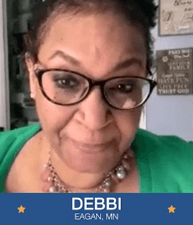 When Debbi’s son was born premature and bleeding in his brain, the doctors gave him two weeks to live. Debbi has now been caring for him, along with the rest of her family, for 27 years. She became an advocate for herself and her son, as many caregivers are forced to do. When Debbi’s son was born premature and bleeding in his brain, the doctors gave him two weeks to live. Debbi has now been caring for him, along with the rest of her family, for 27 years. She became an advocate for herself and her son, as many caregivers are forced to do.
|
 Les and his wife are in their 80s but have been together since they were 16 years old. In 2015, his wife began having cognitive impairments and, through several tests, it was determined that she had Alzheimer’s disease. Les became her caregiver and has relied heavily on the support system in their community. Les and his wife are in their 80s but have been together since they were 16 years old. In 2015, his wife began having cognitive impairments and, through several tests, it was determined that she had Alzheimer’s disease. Les became her caregiver and has relied heavily on the support system in their community.
|
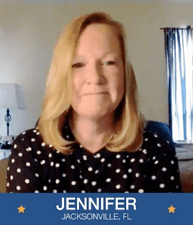
Jennifer M. is a family caregiver for her younger brother who was wounded in Iraq in 2005, and her mother who suffered a stroke in 2007. She feels healthcare providers should create care plans for caregivers, not just for care receivers, and that learning the importance of self-care at the beginning of someone’s caregiving journey will enhance their overall resiliency and longevity. |

Nayma is a young caregiver (ages 18-49), who works part-time while providing care for her two siblings with Autism and her mother. Nayma has no other family in the United States to help support her parents and siblings and is the main translator for her parents. |
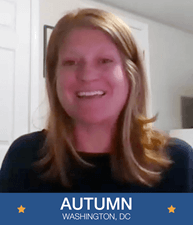
Autumn, a millennial caregiver, was 32 when her mother was diagnosed with a progressive neurogenerative disease at the age of 59. As the only child of a single mother, Autumn became her mother’s caregiver. She wants policy leaders to recognize the need for more funding in the Aging Network to cover home-based community services for the pre-Medicare and non-Medicaid population. |
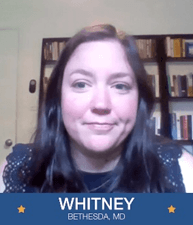
Whitney cared for both her two-year-old and her husband, who was diagnosed with brain cancer, while maintaining full-time work. She provided care for more than forty hours a week due to a decline in cognitive function that her husband experienced preventing him from being left alone. |
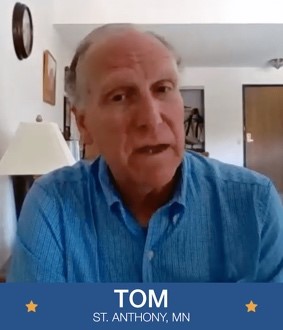
Tom cares for his wife, who was diagnosed with Alzheimer’s disease. His wife’s condition led Tom to ultimately leave his non-profit work and move he and his wife into Senior Housing. After his wife’s diagnosis, Tom and his wife reached out to their community and were part of forming the first “Giving Voice” chorus and started a fun support group, “the Alzheimer Chorus,” which helped those with the disease and their caregivers sing together. |
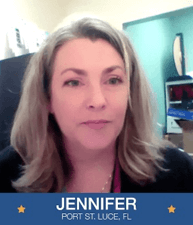
Jennifer realized having her mother admitted to an assisted living facility was the only option after she began wandering and became a danger to herself due to her dementia. The COVID-19 pandemic brought new concerns about the care her mother was receiving. Since visits to her mother’s assisted living facility weren’t allowed, Jennifer wasn’t able to witness the care received and was misinformed of her mother’s health changes. |

A recent high school graduate, Gabe grew up with in a household with his mom, 3 siblings, and his grandpa who has schizophrenia with paranoia. Gabe spent much of his childhood helping around the house and caring for his grandpa. He routinely had to miss out on school opportunities and events, because there was always stuff that had to be done. |
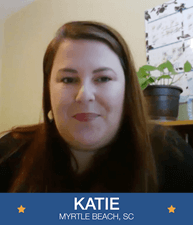
Katie is the mother of a 20-year-old son born with physical and intellectual disabilities caused by a rare disease. Due to her care responsibilities for her son, Katie had to move into a part time position at her job, taking a pay decrease and losing her leave. She and her husband have not been able to save for their future, and her husband has had to work multiple jobs to cover the costs of traveling to see medical specialists for their son. |
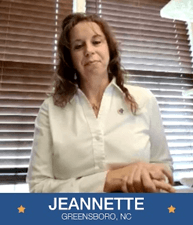
Jeannette’s husband returned from Iraq with Post Traumatic Stress Disorder, Traumatic Brain Injury, signs and symptoms of Chronic Traumatic Encephalopathy, and advanced bone and disc degeneration. His symptoms got worse over time, but Jeannette knew things were forever changed from the very beginning when he was easily angered, confused, and often called her to ask where he was. She knew that their marriage roles had changed, and she was 100 percent in charge of their lives. |
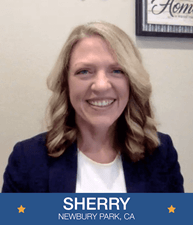
Sherry is a family caregiver for her husband who was diagnosed with Parkinson’s Disease. At the start of her caregiving journey, Sherry struggled to find caregiving communities and it was difficult for her to share her concerns with others. However, once she made those connections, and found others that shared her feelings and experiences, she felt more supported. |

Abena’s husband was diagnosed with a brain tumor in 2013 shortly after she became pregnant with their first child. Once Abena realized she was expected to be a full-time nurse, she decided she had to leave her job altogether to care for her husband. |
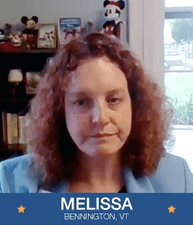
Melissa was the secondary caregiver for her father, who had Lou Gehrig’s disease, and is now the primary caregiver for her husband, who suffers from chronic pain. While Melissa realized right away that she was a caregiver for her father due to the severity of his condition, which required many hours of care, this realization was more gradual with her husband. |
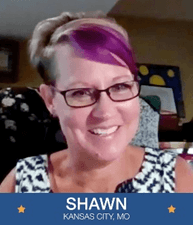
Shawn has been caring for her veteran husband, who has PTSD and is a recovering alcoholic, for seven years and is an integral part of his care team. She did not realize most of her time would be spent taking care of him, rather than spending time as a couple. The first time Shawn had to talk her husband through a flashback related to PTSD, she realized she was a caregiver. |
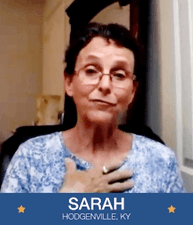
Sarah has had to care for multiple people — her husband, her mother, and her brother before he passed away. Sarah lives in a rural part of the country, and she has long been discouraged by the lack of available services in her area. There are three general practitioners, but no specialists, and in her experience, general practitioners don’t know how to help her with the support she needs. |
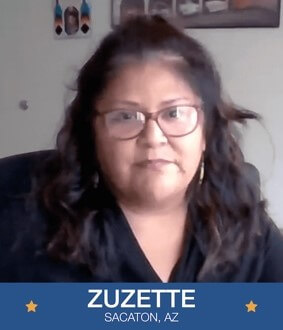
Zuzette identifies as Native American and feels that caring for family members is a valued part of her culture. She jointly cares for her parents along with her sisterher father was placed in a facility due to his dementia and her mother has liver disease. Zuzette didn’t realize she was a “caregiver” until she attended an Older American Title VI conference and took a quiz designed to identify caregivers. |
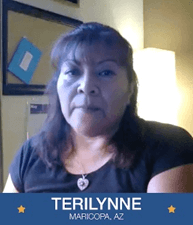
Because caring for family members is a valued part of Native American culture, TeriLynne had to take a lot of time off work to care for her parents, leading her supervisor to write her a bad evaluation. Fortunately for TeriLynne, her supervisor has now had her own caregiving experiences and is better prepared to understand and support TeriLynne’s challenges. |

When Gary’s mother-in-law was diagnosed with Alzheimer’s, Gary’s wife retired to look after her and Gary became a secondary family caregiver. As Gary describes, his “filial piety” is something Gary and his wife endeavor to pass on to their children, whom they occasionally brought into the caregiving bubble to help with their grandmother and whom they leaned on for support. |
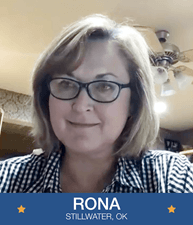
Rona lives in rural Oklahoma and is the mother of three children. Her youngest child is a 13-year-old with Down Syndrome. Her daughter is non-verbal and can’t be left unattended. Respite services are very important to Rona and her family. Respite allows her to be a mom to her other children, attend to her own medical needs, and even have an occasional date with her husband. |
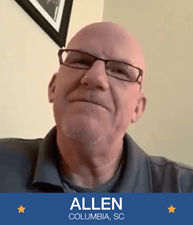
After Allen and his wife adopted three girls from India, Allen’s wife was diagnosed with Stage IV cancer, and Allen became her caregiver. Allen’s greatest support in his care journey came in the form of his church community. He and his family are part of what Allen called a “large-small church,” a big community where everyone knows each other. |

Beth’s husband was diagnosed with colon cancer in 2016. Due to the amount of time her husband spent in the hospital, Beth had to become fluent in the medical language to advocate for him. She had to know when and what medication he needed, and every time there was a new doctor, she had to re-explain his situation and fight for the correct care. |

Jim and his wife have cared for their veteran daughter since she was in a car accident while stationed in Italy as an Army Captain. Their daughter now needs 24/7 care and is in the Veteran Directed Care Program. Jim says that if it weren’t for military benefits, they would be bankrupt. |
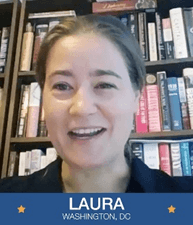
Laura spent two years caring for her husband, who was diagnosed with stage IV neuroendocrine cancer. Even though Laura’s caregiving journey was extremely stressful, and emotionally and physically exhausting, she recognizes that she was fortunate in her ability to stay with him most of the time. Laura’s place of employment offered excellent insurance and a lot of flexibility to allow her to remain working full-time while caring for her husband. |
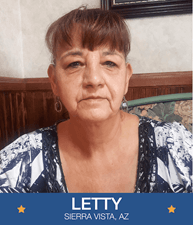
Letty is a caregiver for her parents. Letty’s mother, who had dementia, has since passed on, but Letty still cares for her father. She herself is suffering from health issues on top of the support she provides to her parents. |
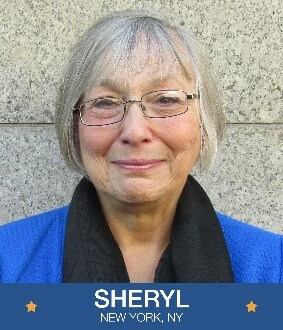
Sheryl is one of 8% of caregivers who identify as LGBTQ+. Because of her husband’s dementia and Parkinsonian symptoms, Sheryl took on managing her household’s finances, house repairs, cooking, cleaning, and maintaining their way of life. |