
Individuals with serious mental illness (SMI) experience significantly higher rates of chronic physical health conditions and die decades earlier than the general population, often from preventable causes. Evidence shows that access to integrated, high-quality care can improve health outcomes and reduce premature mortality.
Strategy: People with serious mental illness experience high rates of chronic physical health conditions and substantially shorter life expectancy. Missouri’s Behavioral Health Healthcare Home (BH HCH) model was designed to address those disparities by integrating physical health care and chronic disease management into community behavioral health settings. The Behavioral Health Healthcare Home model supports multidisciplinary care teams, population health management, and coordination with primary care — an approach that has produced notable improvements in both morbidity and mortality.
Findings: Missouri’s Behavioral Health Healthcare Homes have demonstrated measurable and striking improvements in health outcomes for people with SMI and chronic physical health conditions while managing costs.
- Increased lifespan for participating individuals with SMI by 12 years
- Improved key health indicators of diabetes, high blood pressure, and high cholesterol
- Reduced avoidable utilization of emergency departments and inpatient hospitalizations while increasing post-hospital follow-up care
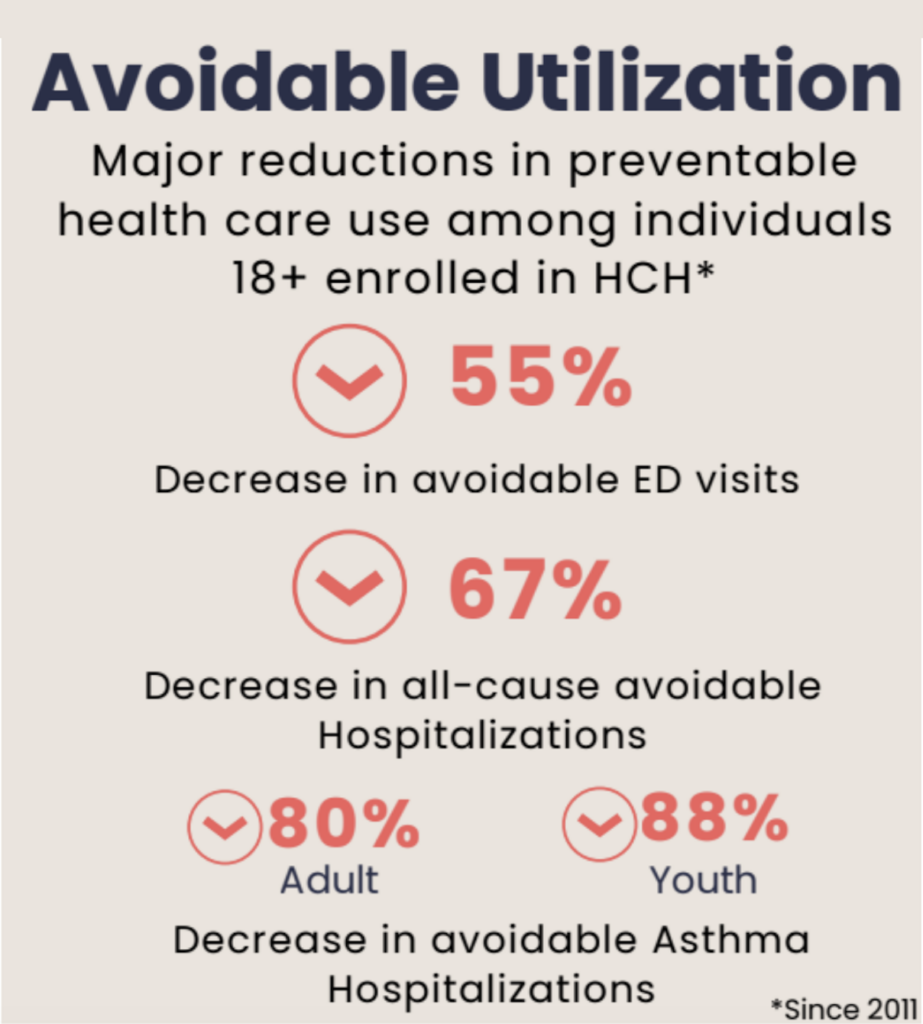
Infographic courtesy of Missouri Behavioral Health Healthcare Home
Missouri’s Approach
Missouri implemented BH HCH through a Medicaid state plan option, led by the Department of Mental Health (DMH) in partnership with MO HealthNet, the state’s Medicaid program. The model embeds care for chronic health conditions within community mental health centers statewide, serving individuals with SMI, children with serious emotional disturbance, and other eligible populations with chronic health conditions (see additional eligibility criteria and qualifying conditions).
Missouri’s BH HCH model uses a per-member-per-month payment to support an integrated care delivery model that includes:
- Comprehensive care management
- Care coordination
- Health promotion
- Comprehensive transitional care and follow-up
- Patient and family support
- Referral to community and social support services, including linkages to primary care, either through partnerships or co-located services
Missouri’s BH HCHs embrace a population health management approach that incorporates health and metabolic screening, risk stratification, and targeted interventions. This approach includes ongoing monitoring of treatment gaps. Care teams support individuals between visits through active care coordination to address care gaps, support medication adherence, schedule appointments, and coordinate across providers.
Missouri encouraged adding these new BH HCH team members to comprehensive psychiatric rehabilitation teams that include community support and peer specialists. Required BH HCH team members include a HCH director, nurse care manager, care coordinators, primary care consultation, and administrative support staff, with a strong emphasis on care coordination, primary care linkages, and transitional care. This multidisciplinary approach allows each team member to address an individual’s needs through distinct roles.
BH HCH teams also support and educate the broader care team. For example, a nurse care manager may help an individual monitor diabetes by explaining what their numbers mean and how diet affects them, while a community support specialist may assist with interpreting nutrition labels and purchasing healthy foods on a limited income.
Missouri’s BH HCH model emphasizes using data and health information technology to support care coordination and track performance. Providers report on key quality and utilization measures, including indicators related to chronic conditions and follow-up care, and use registries and care management tools to monitor patient needs over time. These systems help care teams identify gaps in care, track outcomes such as A1c levels and preventive screenings, and coordinate across behavioral health, specialty, and primary care providers.
Lessons Learned
Missouri’s experience highlights several practical considerations for states pursuing integrated behavioral health models:
- Build on existing infrastructure: Missouri built upon existing integrated care and disease management programs/initiatives, policy, and data sharing efforts. Missouri requires CCBHCs to operate as BH HCHs, leveraging existing BH HCH infrastructure and requirements to strengthen integration and to build consistency across models.
- Align agencies and build relationships early: Strong coordination between Medicaid, DHM, hospitals, and providers have been essential to align financing, policy, roles and informed care delivery.
- Invest in data and information technology: Shared data systems among providers and collaboration with technology partners have been critical to support care coordination, track outcomes, and manage populations, as well as to minimize administrative and documentation burden. Missouri BH HCHs use a statewide care management tool that pulls together Medicaid claims, hospital and emergency department visit information, DMH client data, and electronic health clinical data into a single location, enabling care coordination and population health management.
- Pilot and refine: Iterative testing, rapid-cycle evaluation and routine tracking of key indicators, and adaptation has supported long-term sustainability and continuous improvement.
- Design care teams intentionally: Staffing models should support team-based, whole person care and require data-driven coordination across physical and behavioral health needs.
- Use measures strategically: Incorporate a balance of both process (e.g., metabolic screening completions) and outcome measures (e.g., controlled blood pressure) and adjust measures based on performance. Missouri initially focused on data reporting, then moved to outcomes, and later to performance improvement (e.g., PCP engagement, follow-up after hospitalization).
- Align Medicaid financing with integration goals: Aligning Medicaid reimbursement with the goals and design of integrated care models can help sustain the teams, care coordination, and infrastructure needed to improve outcomes and reduce avoidable, high-cost utilization over time.
Current Direction and Next Steps
Missouri has sustained and expanded its health care homes model over more than a decade, extending it to additional settings and populations including primary care, children with complex trauma, and individuals with developmental disabilities. The DMH is currently focusing on children in efforts to help prevent the onset of chronic medical conditions. Additional focus areas include smoking and obesity. Missouri continues to align its integration strategies with emerging federal opportunities and has refined program measures and design over time based on data and implementation experience.
A key component of Missouri’s current direction is the alignment of its BH HCH with Certified Community Behavioral Health Clinics (CCBHCs). The state requires all CCBHCs to also operate as BH HCHs, creating consistent expectations for care coordination and integration across models. CCBHCs must meet BH HCH standards and maintain national accreditation, including requirements related to staffing, service delivery, reporting, and screening, with a focus on physical health and metabolic monitoring. Together, these efforts position Missouri to continue advancing integrated care while reinforcing accountability for outcomes and quality.
Other blog posts in this series:
Acknowledgments
NASHP thanks Jennifer Johnson, Nora Bock, and Amanda Burrell at the Missouri Department of Mental Health and Tara Crawford and Brent McGinty at the Missouri Behavioral Health Council for their contributions to the innovation series. This publication was made possible through the support of West Health and its partnership to advance behavioral health integration.