This information was compiled based on information from publicly available legislation, state memorandums or executive orders, state websites, and press releases, as well as supplemental interviews with state officials with a role in administering opioid settlement funding.
It offers a snapshot of settlement spending and priorities at the state level (e.g., funding administered by state agencies or designated statewide abatement funds) as well as laws, agreements, and processes that the state has established for allocating funds. NASHP does not track spending at the local or county level, but includes any relevant state-level reports or dashboards that capture local spending within a state. For details on the definitions used here, check out the definitions at the bottom of this page. You can also get an overview of opioid settlement decisions in all states.
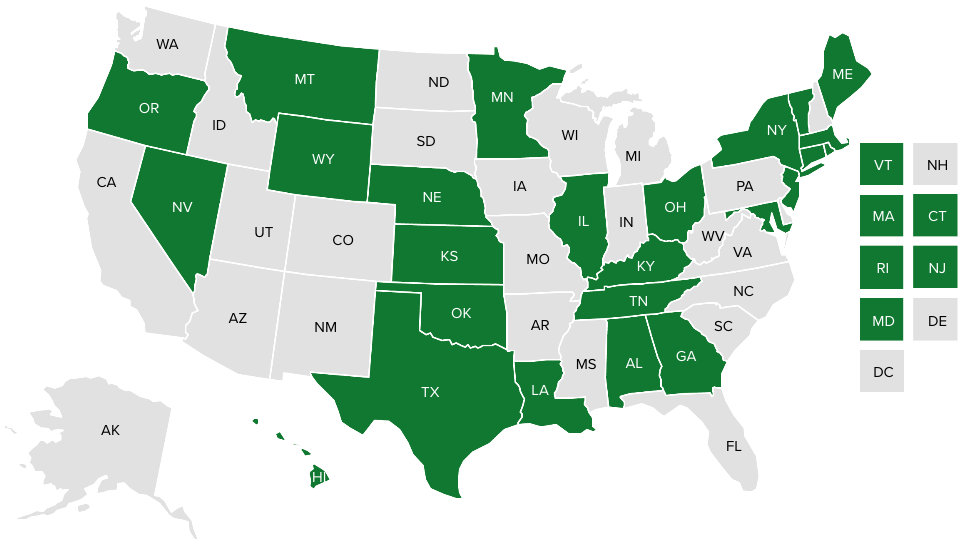
Settlement Spending Status
Background
The Tennessee Opioid Abatement Council, which controls spending from the abatement account share of settlement funding, publishes annual reports highlighting settlement expenditures for the year. The council directs funds from the abatement account to two sources: Counties receive 35 percent of the share, and community grant contracts receive 65 percent. Annual reports provide an overview of Tennessee Opioid Abatement Council duties, activities, and highlights.
Has the state awarded settlement funds?
Yes. The 2024 Annual Report highlights disbursements from the state abatement account, which distributes funding directly to county governments and through a community grant process. In early 2024, all 95 counties received their second annual payments from the account, with funding totaling $31.1 million. Additionally, two rounds of community grant awards have been completed — the initial round funded 113 projects across the state, with the majority of those supporting treatment ($32.78 million), recovery support ($18.9 million), and primary prevention ($12.2 million) initiatives. A list of awardees to date is available on the council’s community grants dashboard.
Has the state announced priorities or recommendations for spending?
Yes. The Tennessee Opioid Abatement Council voted to approve a list of opioid abatement and remediation uses in 2022.
Previous spending details
Not applicable.
Statewide reporting of local spending
Not applicable.
State Settlement Website or Dashboard
Spending Plans and Agreements
Process for Settlement Disbursement
An abatement agreement gives control of the 70 percent Abatement Accounts Fund to an Opioid Abatement Council and calls for the 15 percent state share to be held in the state’s general fund, with reference to the possibility of a legislative appropriation to combine it with the Abatement Accounts Fund.
State and Political Subdivision Split
Structure
Abatement-Fund Controlled (>50 percent of funding controlled by statewide abatement fund)
Allocation Formula
15 percent State Fund, 70 percent Abatement Accounts Fund, 15 percent Subdivision Fund
Role of Advisory Committee
The Opioid Abatement Council has authority to make spending decisions for the Opioid Abatement Fund.
State Annual Report
State Overviews
Awarded settlement funds: A designated state agency or statewide opioid abatement fund has published its intention to allocate a dollar amount to a specific abatement program, activity, strategy, service, or support OR an appropriation of settlement funds has been made through a legislative process. Due to the nature of budgeting and procurement processes, this funding could be in the process of being budgeted, obligated, expended, or disbursed.
Published general priorities or recommendations to guide spending: A state agency, abatement council, or advisory council has published priority areas of focus or recommended strategies to address the opioid crisis with settlement dollars but may or may not have allocated settlement funding yet.
Statewide reporting of local spending: NASHP will not be tracking every spending example at the local level, but this category includes states that have published dashboards or reports that include local expenditures.